
As an Amazon Associate I earn from qualifying purchases.
What to Put in Nebulizer: Safe Options
Learn what to put in nebulizer: saline, prescribed meds, and safe tips to improve comfort. When to consult a healthcare provider.
What to Put in Nebulizer: Safe Options & Tips
This article is informational and not medical advice. Talk to your clinician or pharmacist for personal medical guidance.
- Clear, non-technical guidance on common nebulizer solutions and safety precautions.
- Practical tips to prepare liquids, avoid contamination, and know when to ask a provider.
- Many parents and people with chronic cough report using saline nebulizer treatments for short-term comfort—here’s what they typically do.
Patients and caregivers often share simple routines—using single-use saline vials or pharmacy-dispensed meds and cleaning parts after each session. A pharmacist can confirm compatibility and mixing volumes if a prescription requires dilution. [user experience]
what to put in nebulizer — Saline solutions (isotonic vs hypertonic)
Isotonic saline (0.9% sodium chloride) is the same salt concentration as body fluids and is gentle on airways; it’s commonly used to soothe airways and as a diluent for some meds. [clinical guidance]
Hypertonic saline has a higher salt percentage and may draw moisture into airways to loosen secretions, but it can cause irritation or bronchospasm in sensitive people. Use only under clinician guidance. [clinical guidance]
Always use sterile, pharmacist‑prepared, or manufacturer‑recommended saline made for nebulizer use; avoid homemade unsterile mixes. [manufacturer instruction]
For more about saline choices and safe handling, see our nebulizer saline solution guide. [manufacturer instruction]
what to put in nebulizer — Prescription medications and combinations
Common nebulized prescriptions include bronchodilators and inhaled corticosteroids that clinicians prescribe for specific conditions. These are intended for inhalation as directed. [clinical guidance]
Some medications come pre‑mixed for nebulizers; others must be mixed with saline only when your prescriber or pharmacist explicitly instructs you to do so. Mixing on your own can risk incorrect dosing or incompatibility—stop and ask a clinician if unsure. [clinical guidance]
Caution: Only mix medications with saline when explicitly instructed by your prescriber or pharmacist. Do not follow informal online recipes. [clinical guidance]
For questions about compatibility and mixing, consult your pharmacist—many pharmacies publish specific guidance and can prepare doses. [clinical guidance]
How to prepare liquids for a nebulizer safely
Use only sterile, single‑use vials, pharmacist‑prepared mixes, or manufacturer‑recommended solutions; never add unapproved additives. [manufacturer instruction]
Measure and mix on a clean surface; wash hands and use sterile syringes or vials when required. Discard any unused mixed solution per the medication or saline product instructions. [manufacturer instruction]
Cleaning, storage, and contamination risks for nebulizer liquids

A Simple Technique People Use Before Bed
A short routine designed to help your body relax and unwind naturally.
- ✔ Easy to learn and takes only a few minutes
- ✔ No equipment or supplements required
- ✔ Popular among people struggling to relax at night
Clean nebulizer cups and masks after each use with mild soap and warm water and allow to air dry; disinfect parts per device instructions on a regular schedule. The CDC and many device makers provide cleaning steps to reduce infection risk. [manufacturer instruction]
Stale or contaminated solutions can increase infection risk or lose effectiveness—store unopened vials as labeled and discard opened or mixed solutions per instructions. [clinical guidance]
Replace disposable parts according to manufacturer guidance to reduce microbial growth and keep the device working as intended. [manufacturer instruction]
Read more on device cleaning in our nebulizer cleaning and maintenance guide. [manufacturer instruction]
Nebulizer vs steam inhaler (when a Vicks steam inhaler may help)
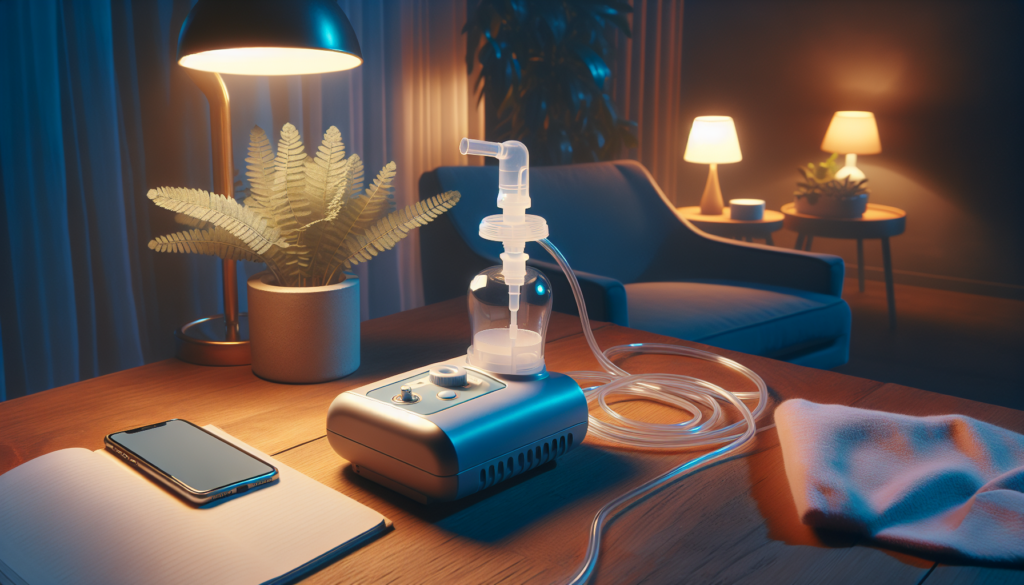
Nebulizers convert liquid medication or saline into a fine aerosol for inhalation into the lower airways and are used for prescribed inhaled treatments. Steam inhalers produce warm, non‑medicated steam for nasal and facial comfort. [clinical guidance]
The Vicks Sinus Inhaler provides targeted warm steam and works with VapoPads for soothing scents—but VapoPads are for use with steam devices, not medical nebulizers. Steam inhalers can improve short‑term nasal comfort but are not a replacement for prescribed nebulized medications. [manufacturer instruction]
Note: Steam devices and nebulizers serve different purposes; do not substitute one for prescribed therapy. [clinical guidance]
When to consult a healthcare provider about what to put in nebulizer
Ask your clinician or pharmacist if you have frequent breathing problems, a prescription requiring dilution, or unclear mixing or storage instructions. Pharmacists can verify compatibility and exact volumes. [clinical guidance]
Stop and seek medical advice if you have increased coughing, wheeze, chest tightness, or persistent irritation after a nebulized treatment. Children, older adults, and people with complex health conditions should use nebulized treatments under professional guidance. [clinical guidance]
Affiliate disclosure: This page contains affiliate links. We may earn a commission if you buy through these links. We only recommend products we’d use ourselves.
Vicks Sinus Steam Inhaler (personal steam inhaler)
Who this helps: People seeking short-term nasal/sinus comfort, caregivers looking for a portable steam option, and users who prefer non‑medicated steam with scented VapoPads. Practical tip: it’s lightweight and easy to use at home or while traveling. [user experience]
Key features:
- Targeted warm steam for nasal and facial relief. [manufacturer instruction]
- Works with mentholated VapoPads designed for the device (do not add pads to nebulizers). [manufacturer instruction]
- Compact, personal design for bedside or travel use. [user experience]
Pros:
- Portable and simple to operate; gentle warm steam for short-term comfort. [user experience]
- Compatible with scented VapoPads made for the device (follow pad instructions). [manufacturer instruction]
Cons:
- Not intended for delivering prescription nebulized medications. [manufacturer instruction]
- Does not replace clinician‑prescribed inhaled therapies. [clinical guidance]
Why it helps: The device provides warmed, non-medicated steam aimed at relieving nasal congestion and promoting comfort; VapoPads add a soothing scent when used as directed. [manufacturer instruction]
Best for: Short-term nasal/sinus comfort and users who want a simple, portable steam option—not for medication delivery. [manufacturer instruction]
Check price on Amazon (prices and availability may change).
FAQ
Can I use saline in a nebulizer?
- Yes—sterile isotonic saline (0.9% sodium chloride) is commonly used as a diluent or to help hydrate airways. [clinical guidance]
- Use only saline made for nebulizer use or provided by a pharmacy; avoid homemade or non‑sterile mixes. [manufacturer instruction]
Can I put essential oils, menthol, or VapoPads in a nebulizer?
- Never add essential oils or menthol pads to a medical nebulizer—these can damage the device and irritate lungs. [manufacturer instruction]
- VapoPads and mentholated pads are intended for use with compatible steam inhalers, not with medical nebulizers. [manufacturer instruction]
What about mixing medications with saline?
- Only mix medications with saline when explicitly instructed by your prescriber or pharmacist. [clinical guidance]
- Follow exact mixing volumes, compatibility guidance, and timelines for use to ensure safety and effectiveness. [clinical guidance]
Is a steam inhaler the same as a nebulizer?
- No—steam inhalers (like the Vicks Sinus Inhaler) produce warm steam for nasal and facial relief and are non‑medicated. [manufacturer instruction]
- Nebulizers convert liquid medications or saline into a fine aerosol for inhalation into the lower airways and are used for prescribed treatments. [clinical guidance]
How do I avoid contamination of nebulizer solutions?
- Use sterile, single-use vials when available and follow manufacturer storage instructions for unopened medications or saline. [manufacturer instruction]
- Clean and disinfect nebulizer parts per device instructions and discard mixed solutions after the recommended time period. [manufacturer instruction]
Conclusion
Sterile isotonic saline and clinician‑prescribed nebulizer medications are the safe primary options for nebulizer use; hypertonic saline and any mixing should only be done under professional guidance. If you’re unsure, check with your pharmacist or clinician before using or mixing solutions. [clinical guidance]
If a steam inhaler fits your goal of short‑term nasal comfort, the Vicks device is a simple option to consider. Check price on Amazon — prices and availability may change.
Further reading
- CDC — infection prevention guidance
- NHS — nebulizer and inhaler guidance
- American Lung Association — home nebulizer information


