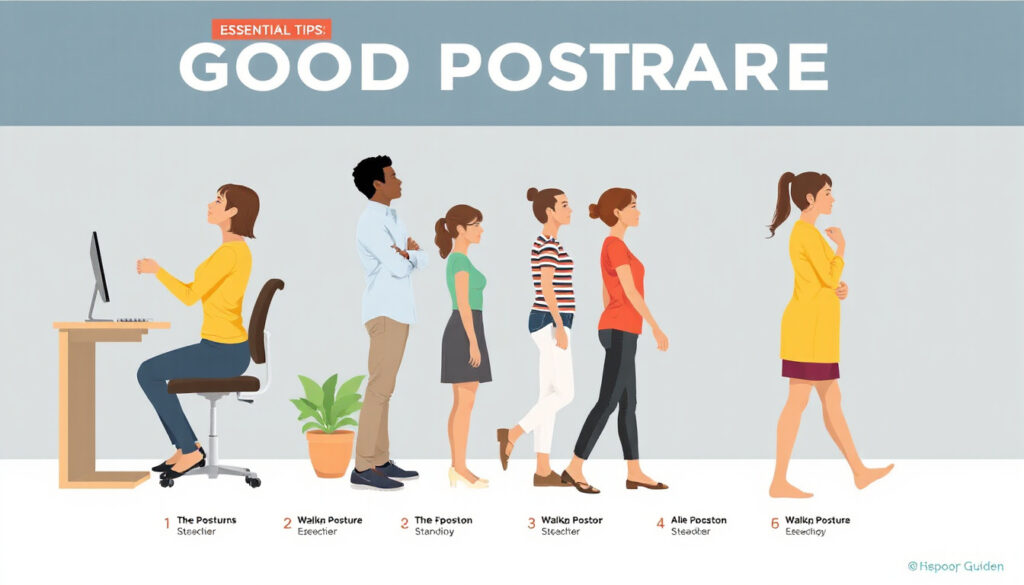

Maintaining good posture is more than just standing tall or sitting up straight—it plays a fundamental role in your long-term health, affecting everything from your musculoskeletal system to your breathing and digestion. Whether you’re moving or stationary, cultivating awareness and habitually practicing proper posture can prevent pain, reduce injury risk, and enhance your overall well-being.
What Is Posture and Why Does It Matter?
Posture refers to how you hold your body in space, with two primary types:
- Static Posture: How you hold yourself while not moving, such as sitting, standing, or sleeping.
- Dynamic Posture: How you position your body when moving—walking, bending, or reaching.
Good posture preserves the natural curves of your spine (neck, mid-back, and lower back) without exaggerating them. Your head should align over your shoulders, and your shoulders should be stacked above your hips. This alignment maintains balance and distributes weight evenly through your body.
Poor posture, like slouching or hunching, can misalign your musculoskeletal structure, cause joint wear, lead to muscle pain, reduce flexibility, and even affect breathing and digestion. It increases the risk of falls by impairing balance and can contribute to chronic pain conditions in the back, neck, and shoulders.
How to Improve Your Posture Throughout the Day

1. Cultivate Posture Awareness
Be mindful of your posture during daily activities. Check in periodically—every 15 minutes if possible—especially when you’re sitting for long periods. Simple awareness can help reset your posture and reduce strain before discomfort sets in.
2. Optimize Your Sitting Posture
Much of modern life involves sitting, so it’s critical to sit properly:
- Keep feet flat on the floor; if they don’t reach, use a footrest.
- Avoid crossing your legs; keep ankles in front of knees.
- Keep your back fully supported, ideally with a chair that supports the natural curve of your lower back or use a lumbar cushion.
- Keep shoulders relaxed and not rounded forward or pulled back unnaturally.
- Maintain elbows close to your body with forearms supported, bent at 90 to 120 degrees.
- Adjust your sitting position frequently—shift, stretch, and take short walks to prevent muscle tension.
3. Enhance Standing Posture
When standing:
- Stand tall with your shoulders back and relaxed.
- Pull your stomach in slightly to engage core muscles.
- Keep your head level, aligned over your shoulders.
- Distribute your weight primarily on the balls of your feet.
- Keep feet about shoulder-width apart for stability.
- Let your arms hang naturally at your sides.
4. Strengthen and Stretch Key Muscle Groups
Balanced muscle strength and flexibility are essential to maintain correct posture:
- Strengthening exercises for core, shoulders, hips, and legs help you support your spine and hold proper positions longer.
- Stretching routines relax tight muscles, improve flexibility, and prevent imbalances that lead to pain and poor posture.
Incorporate muscle-strengthening and stretching exercises into your daily routine. Yoga, tai chi, or specific physical therapy exercises are excellent for improving body awareness and posture control.
5. Sleep with Posture in Mind
Your posture doesn’t rest when you sleep—it can be supported or aggravated by your sleeping position.
- Side sleepers should place a pillow between their knees to keep hips aligned.
- Back sleepers benefit from a pillow under the knees to reduce lower back strain.
- Avoid stomach sleeping as it strains neck and back.
Also, practice safe bed mobility: bend knees and roll to your side before sitting up to protect your spine.
6. Wear Supportive Footwear and Maintain Healthy Weight
Shoes have a significant effect on posture. Avoid high heels or ill-fitting shoes that alter foot placement and body mechanics.
Maintaining a healthy weight prevents undue strain on your abdominal, pelvic, and back muscles, reducing the risk of low back pain and postural problems.
7. Move Regularly to Avoid Prolonged Static Posture
No posture is ideal if held for too long. Prolonged sitting or standing—even with good posture—can cause stiffness and discomfort.
Take breaks every 30 minutes to stand, stretch, or walk around. Regular movement encourages dynamic posture and prevents muscle fatigue and joint stiffness.
When to Seek Professional Help
If you experience persistent pain in your back, neck, or shoulders that doesn’t improve with self-care measures, consider seeing a healthcare provider. A physical therapist can evaluate your posture, identify specific muscle imbalances or weaknesses, and design tailored exercises to enhance your posture and function.
Maintaining good posture is a day-to-day commitment that benefits not only your spine but your entire body’s health. By being mindful, strengthening and stretching muscles, supporting your body during rest, and staying active, you can unlock the secrets to a healthier, more comfortable, and energized you.


