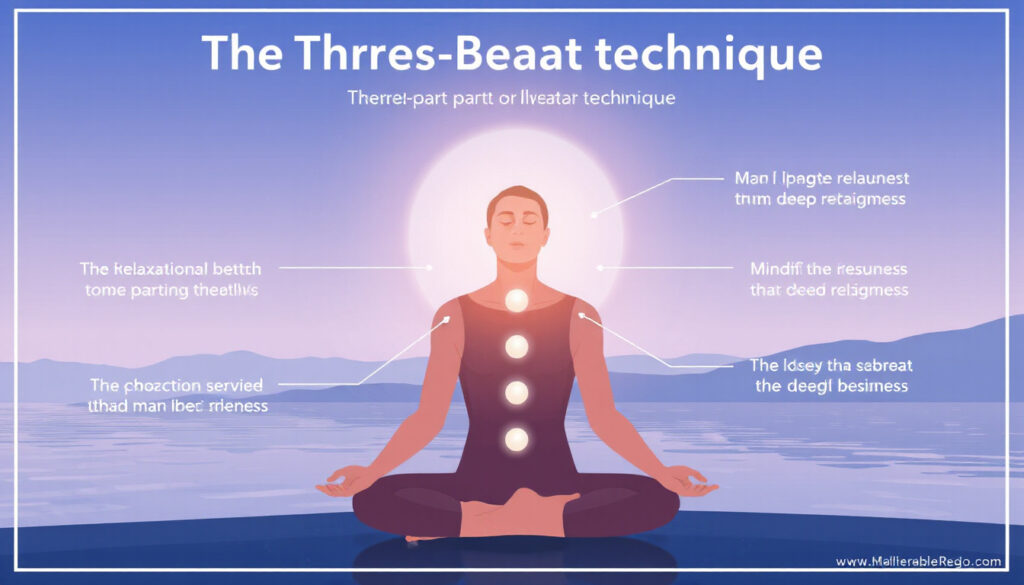

Breath is a powerful tool that connects the body and mind, often serving as a bridge to deeper states of relaxation and mindfulness. Among the various breathing techniques practiced in yoga and mindfulness traditions, the Three-Part Breath, also known by its Sanskrit name Dirgha Pranayama, stands out for its simplicity and effectiveness. This comprehensive guide explores what the Three-Part Breath is, its benefits, step-by-step instructions, common pitfalls, and tips to incorporate it into your daily life for enhanced well-being.

What Is the Three-Part Breath?
The Three-Part Breath is a foundational breathing exercise practiced in yoga, designed to engage three distinct areas of the lungs: the belly (lower lungs), the rib cage (middle lungs), and the upper chest (upper lungs). Unlike shallow breathing that primarily involves the upper chest, Dirgha Pranayama encourages full, mindful engagement of the respiratory system, fostering a gentle wave-like motion in the breath.
This practice plays an essential role in pranayama, the yogic discipline of breath regulation. It not only prepares practitioners for meditation but also actively regulates the autonomic nervous system, shifting the body from a stress-induced "fight or flight" response to a calmer "relaxation response."
Benefits of Three-Part Breath
Regular practice of the Three-Part Breath offers multiple physiological and mental health benefits:
- Deep Relaxation: Engaging the full lung capacity calms the nervous system, decreasing heart rate and lowering stress hormones like cortisol.
- Increased Oxygenation: Deep breathing enhances oxygen flow to the bloodstream and brain, promoting alertness and mental clarity.
- Stress Reduction: Intentional breath control can alleviate anxiety, and even assist in managing panic attack symptoms.
- Mindfulness and Focus: Concentrating on the breath anchors attention to the present moment, improving focus during meditation and daily activities.
- Improved Lung Capacity: Encourages full use of the lungs and diaphragm, which can benefit respiratory health.
- Accessible Anywhere: Can be performed seated, lying down, or reclined, making it suitable for a wide range of ages and physical abilities.
How to Do the Three-Part Breath: Step-by-Step
Preparation
Find a comfortable position, either seated cross-legged on a mat or a chair, or lying flat on your back. Close your eyes to minimize distractions and bring your awareness gently to your natural breathing pattern.
Part One: Belly Breath
- Begin by inhaling slowly through your nose, directing the air into your belly so it expands gently—imagine your abdomen filling like a balloon.
- Exhale smoothly through your nose, drawing your navel toward the spine to fully empty the belly.
- Repeat this deep belly breathing for about 5 breaths, focusing on smooth and unforced breath cycles.
Part Two: Rib Cage Breath
- On your next inhale, fill your belly first, then continue to expand the breath into your rib cage, feeling your ribs widen outward.
- Exhale completely through the nose, releasing air first from the rib cage (ribs drawing closer), then from the belly (navel drawing in).
- Repeat this for approximately 5 breaths.
Part Three: Upper Chest Breath
- Inhale deeply through the nose, filling your belly, rib cage, and then the upper chest area near the collarbones—lift the heart center gently.
- Exhale fully through the nose, releasing air from the upper chest first, followed by the rib cage, then the belly, drawing the navel inward.
- Continue this full three-part breath cycle for about 10 breaths, eventually allowing the breath to flow evenly without pausing between segments.
Common Mistakes to Avoid

A Simple Technique People Use Before Bed
A short routine designed to help your body relax and unwind naturally.
- ✔ Easy to learn and takes only a few minutes
- ✔ No equipment or supplements required
- ✔ Popular among people struggling to relax at night
- Breathing Too Deeply or Forcefully: The breath should feel comfortable and natural, not strained or forced beyond your lung capacity.
- Shallow or Rapid Breathing: Aim for slow, smooth, and even breaths rather than hurried inhales or exhales.
- Tension in the Body: Relax your face, jaw, shoulders, and abdomen while you breathe to avoid creating unnecessary muscle tension.
- Ignoring Breath Sequence: Proper Three-Part Breath sequentially fills and empties the belly, rib cage, and upper chest; skipping a part diminishes the effect.
Modifications and Tips
- Position Variations: Choose a position that feels best—seated, lying down, or even standing. Beginners often find lying supine (on the back) helpful to feel the breath’s movement more clearly.
- Use Your Hands for Feedback: Rest one hand on your belly, another on your ribs, and a third on your upper chest to track each breath phase.
- Lengthen Exhalations: As you become comfortable, gradually extend the length of your exhale to deepen relaxation.
- Practice Daily: Start with 5 to 10 minutes daily, especially at the beginning or end of your yoga or meditation practice.
- Mindful Awareness: Let the breath guide you into the present moment, gently returning your focus each time the mind wanders.
Safety Considerations
For most individuals, Three-Part Breath is safe and calming. However, if you have respiratory conditions such as asthma or experience dizziness or discomfort, discontinue the practice and consult a healthcare provider. Always listen to your body’s signals and avoid pushing beyond your comfortable breathing capacity.
Integrating Three-Part Breath Into Everyday Life
The Three-Part Breath is more than just a yogic exercise; it’s a practical tool for managing stress and enhancing mindfulness that can be used anytime you feel overwhelmed, unfocused, or need to ground yourself. Practicing this breath during work breaks, before sleep, or anytime during the day can cultivate a sense of calm and centeredness.
Conclusion
Mastering the Three-Part Breath can transform your approach to stress, mindfulness, and overall health. By cultivating awareness and control over your breath, you hold the key to unlocking deeper relaxation and sharper mental focus. Whether you are new to yoga or an experienced practitioner, this simple yet profound practice invites a gentle wave of calm to ripple through your body and mind whenever you need it.
Take a deep breath—it’s time to let go, relax, and be present with the Three-Part Breath.


