
Recommended picks
This article may include affiliate links. If you click and buy, we may earn a commission at no extra cost to you.

4.6 rating 14,100 reviews
Check on Amazon
4.6 rating 13,200 reviews
Check on Amazon
4.6 rating 5,200 reviews
Check on AmazonQuick answer
Beginner-friendly, practical breathing techniques for everyday lung support with clear instructions, safety notes, and when-to-see-a-doctor guidance.
Key takeaways
- What are the easiest breathing exercises for beginners?
- How do breathing exercises help the lungs?
- How often should I do breathing exercises?
- Which breathing techniques are best for shortness of breath?
Easy Breathing Exercises to Support Lung Health
A simple, beginner-friendly guide to techniques that can help you breathe more comfortably, reduce tension, and build a calmer daily routine.
If you want a low-effort way to practice steadier breathing at home, a few simple exercises can help you slow down, notice your breathing pattern, and feel more in control. These techniques are gentle, easy to learn, and can fit into a busy day.
They are meant to support comfort and breathing awareness, not replace medical care. If you have a lung condition or your symptoms are changing, it is best to check with a clinician before starting a new routine.
What breathing exercises can do for your lungs
Controlled breathing may help you use your breath more efficiently, especially when stress, tension, or shallow breathing make it feel harder to settle into a natural rhythm. Many people find that a short breathing practice helps them feel calmer and more aware of how they breathe throughout the day.
These exercises can support breath control and relaxation, but they do not treat lung disease or replace prescribed care. Think of them as a simple wellness tool that may make breathing feel easier and more intentional.
Who can benefit from simple breathing exercises
Easy breathing exercises for lungs can be useful for beginners who want a gentle daily habit, adults who notice shallow breathing during stress, and people who feel mildly short of breath during everyday activity.
They can also be helpful if you want a calm reset during the day, before sleep, or after a busy moment. If you have asthma, COPD, or another respiratory condition, ask a healthcare professional whether a specific technique is appropriate for you.
How to prepare before you start
Choose a quiet place where you can sit upright in a chair or lie down with support. Let your shoulders drop, unclench your jaw, and relax your neck before you begin.
Try to breathe through your nose when possible and avoid forcing the breath. If you feel dizzy, develop chest pain, or notice worsening shortness of breath, stop right away and return to normal breathing.
Diaphragmatic breathing
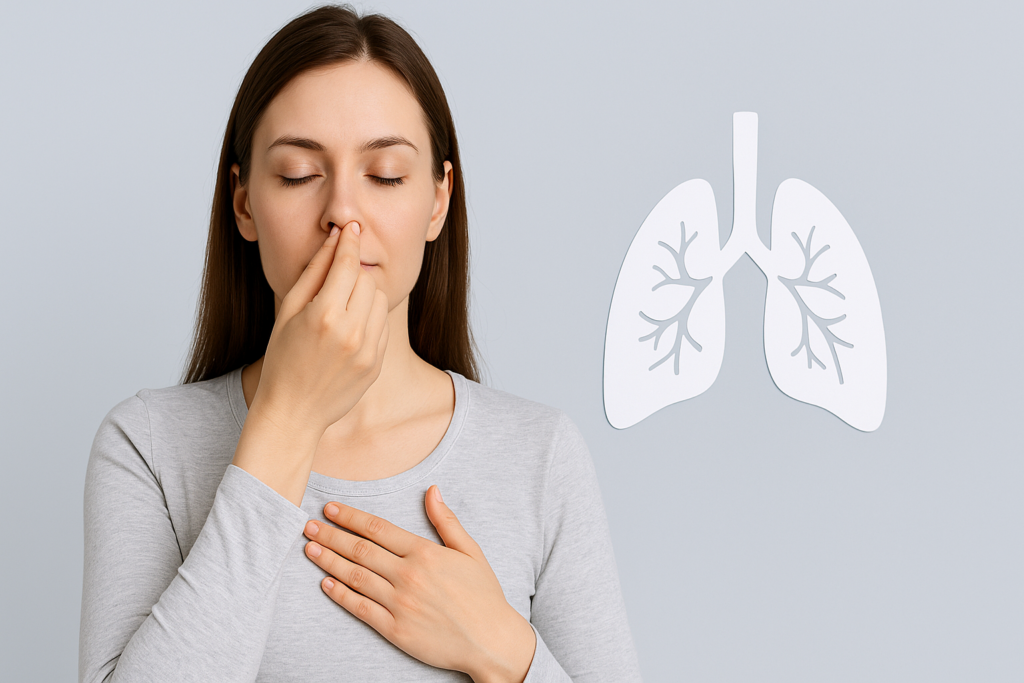
Diaphragmatic breathing is one of the easiest breathing exercises for beginners because it helps you focus on the lower part of the breath.
- Place one hand on your chest and the other on your belly.
- Inhale gently through your nose so your belly rises more than your chest.
- Exhale slowly through pursed lips and let your belly fall.
- Keep the movement smooth and relaxed, without pushing the breath.
Start with 3 to 5 minutes and increase gradually if it feels comfortable. The goal is calm, steady breathing rather than taking the deepest breath possible.
Pursed-lip breathing
Pursed-lip breathing can make exhalation feel easier and help slow your breathing rate. It is often useful during walking, climbing stairs, or any moment when you feel a little breathless.
- Inhale slowly through your nose for about 2 counts.
- Purse your lips as if you are gently blowing out a candle.
- Exhale slowly and evenly through the pursed lips for about 4 counts.
- Keep the exhale longer than the inhale if that feels comfortable.
This technique is simple, portable, and easy to use in daily life when you want a steadier rhythm.
Box breathing for calm and control
Box breathing uses equal-length phases to create a steady pattern. It is often used for stress reduction and can help you pay closer attention to your breathing rhythm.
- Inhale gently for 4 counts.
- Hold for 4 counts.
- Exhale for 4 counts.
- Hold again for 4 counts.
If a 4-4-4-4 pattern feels too long, use a softer count that feels comfortable, such as 3-3-3-3. Keep the breath smooth and avoid straining.
Segmented or paced breathing for daily practice
Segmented or paced breathing means breathing at a slow, steady rhythm that you can repeat easily. You can match the breath to a count, a gentle walking pace, or a quiet movement like raising and lowering your hands.
This is a practical option if you want a short routine in the morning, before bed, or during a work break. The main idea is consistency: a calm rhythm that you can maintain without effort.
How to build a simple routine
Start with one or two exercises per day instead of trying to do everything at once. A short routine is easier to keep up and less likely to feel overwhelming.
- Practice at the same time each day when possible.
- Begin with 3 to 5 minutes and add time slowly.
- Notice how you feel before and after each session.
- Choose the technique that feels easiest to repeat.
Consistency matters more than intensity. A small daily habit is often more useful than an occasional long session.
Common mistakes to avoid
Breathing exercises should feel gentle. If you push too hard, you may feel lightheaded or tense instead of calm.
- Breathing too deeply or too quickly.
- Lifting the shoulders or tightening the neck.
- Holding the breath for too long.
- Continuing through pain or warning signs.
If the exercise feels uncomfortable, slow down, shorten the counts, or switch to a simpler technique.
When breathing exercises are not enough
Breathing exercises are not a substitute for medical evaluation. Seek medical attention if you have persistent wheezing, chest pain, blue lips, severe shortness of breath, or a sudden change in breathing that feels unusual for you.
If you live with chronic lung disease, follow your care plan and ask your clinician or respiratory therapist which techniques are appropriate. If symptoms become severe or come on suddenly, get urgent help right away.
Frequently asked questions
What is the easiest breathing exercise for beginners?
Diaphragmatic breathing is often the easiest place to start because it is simple, gentle, and helps you notice how your breath moves through the belly and chest.
How long should I do breathing exercises each day?
Many people start with 3 to 5 minutes once or twice a day and gradually increase as it feels comfortable. Consistency matters more than long sessions.
Can breathing exercises improve lung function?
They may help you breathe more efficiently, improve control, and reduce tension, but they do not cure lung disease or replace medical treatment.
Are breathing exercises safe if I have asthma or COPD?
They can be helpful for some people, but you should check with a healthcare professional first, especially if your symptoms change often or are severe.
Should I stop if I feel dizzy?
Yes. Stop the exercise, return to normal breathing, and rest. If dizziness or shortness of breath keeps happening, seek medical advice.
Try a simple routine today
Pick one technique, practice it for a few minutes, and see how it feels. Over time, a short daily routine can help you build confidence, notice your breathing patterns, and create a calmer moment in your day.
Try one simple breathing exercise today and build a short daily routine that supports calmer, easier breathing over time.
Related reading
Comparison snapshot

A Simple Technique People Use Before Bed
A short routine designed to help your body relax and unwind naturally.
- ✔ Easy to learn and takes only a few minutes
- ✔ No equipment or supplements required
- ✔ Popular among people struggling to relax at night
| Product | Rating | Reviews | Availability |
|---|---|---|---|
| Men's KnitFlex Breeze Mesh Sneakers Oxfords Lace-Up Lightweight Casual Walking Shoes | 4.6 | 14,100 | Available from Amazon |
| Men's Charged Surge 4 Sneaker | 4.6 | 13,200 | Available from Amazon |
| Nike Women's Court Vision Low Next Nature Shoes | 4.6 | 5,200 | Available from Amazon |
| Mens Running Shoes Slip On Tennis Walking Sneakers Workout Athletic Lightweight Casual Sport Shoes | 4.3 | 915 | Available from Amazon |
| Women's Charged Surge 4 Running Shoe | 4.5 | 5,600 | Available from Amazon |
Pros and cons
Pros
- Clearer shortlist for easy breathing exercises for lungs.
- Helps compare trade-offs before buying.
- Includes editorial review checkpoints.
Cons
- Pricing and availability should be verified on Amazon.
- Best choice depends on your use case.
- Product listings may change after publication.
Frequently asked questions
What is the easiest breathing exercise for beginners?
Diaphragmatic breathing is often the easiest place to start because it is simple, gentle, and helps you notice how your breath moves through the belly and chest.
How long should I do breathing exercises each day?
Many people start with 3 to 5 minutes once or twice a day and gradually increase as it feels comfortable. Consistency matters more than long sessions.
Can breathing exercises improve lung function?
They may help you breathe more efficiently, improve control, and reduce tension, but they do not cure lung disease or replace medical treatment.
Are breathing exercises safe if I have asthma or COPD?
They can be helpful for some people, but you should check with a healthcare professional first, especially if you have symptoms that change often or are severe.
Should I stop if I feel dizzy?
Yes. Stop the exercise, return to normal breathing, and rest. If dizziness or shortness of breath keeps happening, seek medical advice.