
Recommended picks
This article may include affiliate links. If you click and buy, we may earn a commission at no extra cost to you.

4.5 rating 12,800 reviews
Check on Amazon
4.6 rating 5,200 reviews
Check on Amazon
4.6 rating 57,800 reviews
Check on AmazonQuick answer
Focus on gentle, low-risk breathing methods that can help mobilize mucus, calm breathing effort, and support recovery from temporary congestion without overpromising treatment.
Key takeaways
- What breathing exercises can help with chest congestion?
- How do you breathe when your lungs feel full of mucus?
- Are there breathing techniques that help loosen phlegm?
- How often should you do breathing exercises when congested?
How to Breathe Easier When Your Chest Feels Congested
A practical guide to gentle techniques that may help loosen mucus, reduce tightness, and support clearer airflow at home
If your chest feels heavy, your breathing sounds noisy, or mucus seems stuck, gentle breathing techniques may help you feel more comfortable while your body recovers. The goal is not to force anything or replace treatment, but to support calmer, more efficient breathing when congestion makes each breath feel harder.
What chest congestion feels like and why breathing can become harder
Chest congestion is a broad term people use when the chest feels full, tight, or weighed down by mucus. It often happens during a cold, flu, allergies, bronchitis, asthma flare-up, or after exposure to smoke, dust, or other irritants.
Common symptoms can include:
- A tight or heavy feeling in the chest
- Coughing, especially when trying to bring up mucus
- Wheezing or noisy breathing
- Shortness of breath or feeling unable to take a full breath
- Thick mucus or phlegm in the throat or chest
Breathing exercises for congested lungs may help you feel less strained, but they do not diagnose or treat the underlying cause. If symptoms are severe or not improving, medical evaluation matters.
How breathing exercises may help congested lungs
When your chest feels congested, it is easy to start breathing quickly or shallowly. That can make you feel more tense and may make coughing less effective. Slow, controlled breathing may help calm the body and reduce the sense of air hunger.
Some techniques may also help move air behind mucus, which can make it easier to cough in a more controlled way. The aim is comfort and support, not aggressive clearing.
These techniques often work best alongside rest, fluids, and any prescribed inhalers or medications you have been told to use.
Safety first: when to avoid or modify exercises
Stop any exercise if you feel dizzy, develop chest pain, become more short of breath, or start coughing so hard that you cannot recover comfortably.
Use extra caution if you have asthma, COPD, pneumonia, heart disease, or you are recovering from recent surgery. In those situations, it is best to check with a clinician before trying new breathing techniques.
Get urgent medical help if you notice:
- Blue lips or fingertips
- Confusion or unusual drowsiness
- High fever or rapidly worsening illness
- Trouble speaking in full sentences
- Sudden severe breathing difficulty
Best breathing exercises for congested lungs
- Pursed-lip breathing: helps slow exhalation and may reduce air trapping.
- Diaphragmatic breathing: encourages deeper belly breathing and relaxation.
- Huff coughing: may help move mucus without the strain of repeated harsh coughing.
- Segmental or lateral rib breathing: can help expand areas of the chest that feel tight.
- Paced breathing: useful for calming breathlessness during activity or coughing spells.
Step-by-step instructions for each technique
Pursed-lip breathing
- Sit upright and relax your shoulders.
- Inhale slowly through your nose for about 2 counts.
- Pucker your lips as if you are gently blowing out a candle.
- Exhale slowly through pursed lips for about 4 counts.
- Repeat for several breaths, resting if you feel lightheaded.
Diaphragmatic breathing
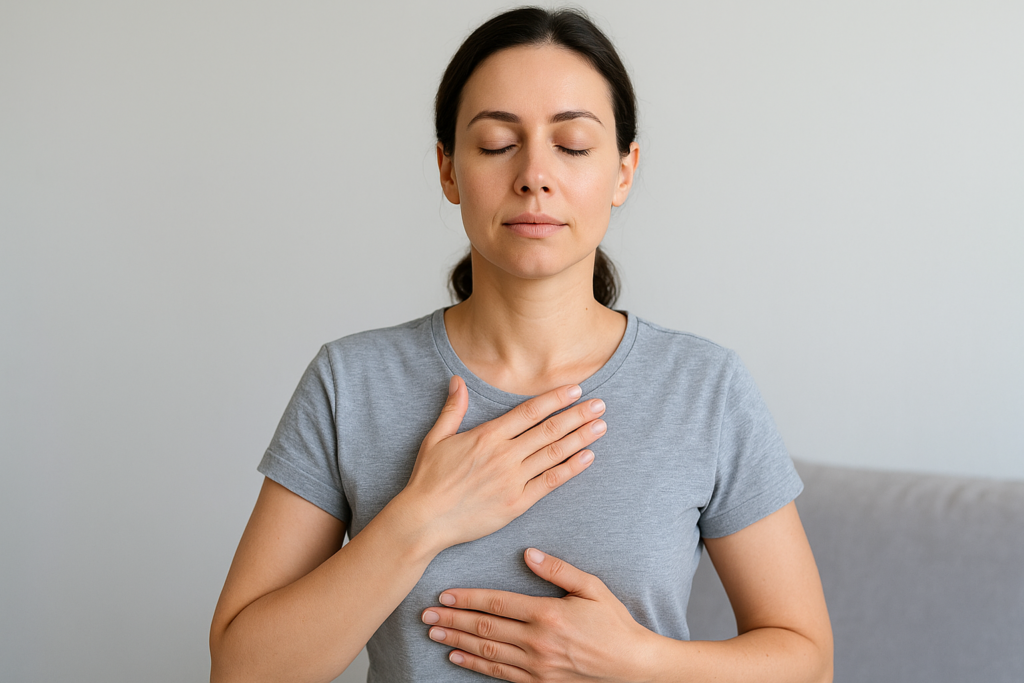
- Place one hand on your upper chest and one on your belly.
- Inhale through your nose and let your belly rise more than your chest.
- Exhale slowly and let your belly fall.
- Keep the movement gentle and unforced.
- Practice for a few minutes at a time.
Huff coughing
- Take a medium breath in through your nose.
- Keep your mouth open and exhale forcefully but not violently, saying “huff” as you breathe out.
- Repeat once or twice, then follow with a normal cough if mucus moves upward.
- Rest and breathe normally between attempts.
Segmental or lateral rib breathing
- Place your hands on the sides of your lower ribs.
- Inhale and try to feel the ribs widen gently into your hands.
- Exhale slowly and let the ribs soften.
- Use this technique if one area of the chest feels especially tight.
Paced breathing
- Inhale for a comfortable count, such as 2 or 3.
- Exhale for a slightly longer count, such as 4.
- Use this rhythm during walking, stairs, or coughing spells.
- Keep the pace easy and adjust it to your comfort.
Short sessions several times a day are usually more comfortable than long, tiring ones. Many people find it helpful to practice after a warm shower, steam, or hydration if those are appropriate for them.
A gentle routine you can try at home
If you want a simple starting point, try this short sequence while sitting upright or supported in bed:
- Begin with 2 to 5 minutes of relaxed breathing.
- Do 3 to 5 rounds of diaphragmatic breathing.
- Add 3 to 5 huff coughs if mucus feels stuck.
- Finish with pursed-lip breathing to settle your breath.
Rest between repetitions, and breathe through your nose when possible. If the routine makes you feel worse, stop and reassess.
Tips to make breathing easier when mucus is thick
- Stay hydrated unless a clinician has told you to limit fluids.
- Use warm steam or a humidifier if appropriate for your situation and environment.
- Sit upright and avoid slouching, which can make breathing feel tighter.
- Try light movement or a short walk if you feel able.
- Avoid smoke, strong odors, and other irritants that can worsen symptoms.
When breathing exercises are not enough
Home techniques are meant for supportive care, not as a substitute for medical evaluation. You should contact a clinician if congestion is persistent, getting worse, or paired with symptoms that suggest something more serious.
Watch for:
- Fever that does not improve
- Chest pain
- Wheezing that is worsening
- Green or bloody mucus
- Symptoms lasting more than a few days without improvement
People with asthma, COPD, or recurrent infections may need medication adjustments or a different care plan. If breathing becomes suddenly difficult, seek urgent care.
How to combine breathing exercises with recovery habits
Breathing exercises tend to work best when they are part of a broader recovery routine. Pair them with rest, fluids, and any prescribed inhalers or medications you have been instructed to use.
You might try a short session after waking, before bed, or after mucus seems to loosen. Over the next few days, notice whether your breathing feels calmer, your cough feels more productive, or your chest feels less tight.
If you live with a chronic lung condition, follow your clinician’s advice rather than relying on self-care alone.
Frequently asked questions
What is the best breathing exercise for chest congestion?
Pursed-lip breathing and huff coughing are often helpful because they slow breathing, reduce strain, and may move mucus more effectively. Diaphragmatic breathing can also help you breathe more comfortably.
Can breathing exercises clear mucus from the lungs?
They may help loosen and move mucus so it is easier to cough out, but they do not directly treat the cause of congestion. Hydration, rest, and medical treatment may also be needed.
How often should I do breathing exercises when congested?
Many people do short sessions several times a day, especially when symptoms feel worse. Stop if you feel dizzy or more short of breath, and follow medical advice if you have a lung condition.
Should I do these exercises if I have asthma or COPD?
Possibly, but it is best to check with a clinician first. People with chronic lung conditions may need specific techniques or medication guidance.
When should I see a doctor for congested lungs?
Seek medical care if symptoms are severe, last more than a few days, or come with fever, chest pain, wheezing, blue lips, confusion, or trouble speaking in full sentences.
Helpful related guides
Try the gentle routine above for a few minutes and monitor how your breathing feels. If congestion is severe, persistent, or paired with warning signs, contact a healthcare professional.
Comparison snapshot

A Simple Technique People Use Before Bed
A short routine designed to help your body relax and unwind naturally.
- ✔ Easy to learn and takes only a few minutes
- ✔ No equipment or supplements required
- ✔ Popular among people struggling to relax at night
| Product | Rating | Reviews | Availability |
|---|---|---|---|
| Women’s VL Court 3.0 Sneaker | 4.5 | 12,800 | Available from Amazon |
| Nike Women's Court Vision Low Next Nature Shoes | 4.6 | 5,200 | Available from Amazon |
| Men's Charged Assert 9 Running Shoe | 4.6 | 57,800 | Available from Amazon |
| Men's KnitFlex Breeze Mesh Sneakers Oxfords Lace-Up Lightweight Casual Walking Shoes | 4.6 | 14,100 | Available from Amazon |
| Nike Men's Air Monarch IV Training/Workout Shoes | 4.4 | 30,000 | Available from Amazon |
Pros and cons
Pros
- Clearer shortlist for breathing exercises for congested lungs.
- Helps compare trade-offs before buying.
- Includes editorial review checkpoints.
Cons
- Pricing and availability should be verified on Amazon.
- Best choice depends on your use case.
- Product listings may change after publication.
Frequently asked questions
What is the best breathing exercise for chest congestion?
Pursed-lip breathing and huff coughing are often helpful because they slow breathing, reduce strain, and may move mucus more effectively. Diaphragmatic breathing can also help you breathe more comfortably.
Can breathing exercises clear mucus from the lungs?
They may help loosen and move mucus so it is easier to cough out, but they do not directly treat the cause of congestion. Hydration, rest, and medical treatment may also be needed.
How often should I do breathing exercises when congested?
Many people do short sessions several times a day, especially when symptoms feel worse. Stop if you feel dizzy or more short of breath, and follow medical advice if you have a lung condition.
Should I do these exercises if I have asthma or COPD?
Possibly, but it is best to check with a clinician first. People with chronic lung conditions may need specific techniques or medication guidance.
When should I see a doctor for congested lungs?
Seek medical care if symptoms are severe, last more than a few days, or come with fever, chest pain, wheezing, blue lips, confusion, or trouble speaking in full sentences.