
Recommended picks
This article may include affiliate links. If you click and buy, we may earn a commission at no extra cost to you.

4.5 rating 12,700 reviews
Check on Amazon
4.6 rating 89,300 reviews
Check on Amazon
4.6 rating 22,600 reviews
Check on AmazonQuick answer
Focus on safe, routine cleaning methods for nebulizer tubing, including what to use, what to avoid, drying tips, and when to replace tubing.
Key takeaways
- How often should nebulizer tubing be cleaned?
- Can you wash nebulizer tubing with soap and water?
- Should nebulizer tubing be boiled or disinfected?
- How do you dry nebulizer tubing after cleaning?
How to Clean Nebulizer Tubing Safely and Effectively
A practical step-by-step guide for keeping your equipment hygienic, reducing buildup, and helping treatments work as intended.
Keeping nebulizer tubing in good condition is mostly about routine care, careful drying, and following the instructions for your specific device. Because tubing materials and cleaning rules vary by brand and model, the manual should always come first.
Safety note: Always check your nebulizer manual before cleaning tubing. Some tubing is washable, while other tubing should be replaced instead of washed.
What nebulizer tubing does and why it needs regular cleaning
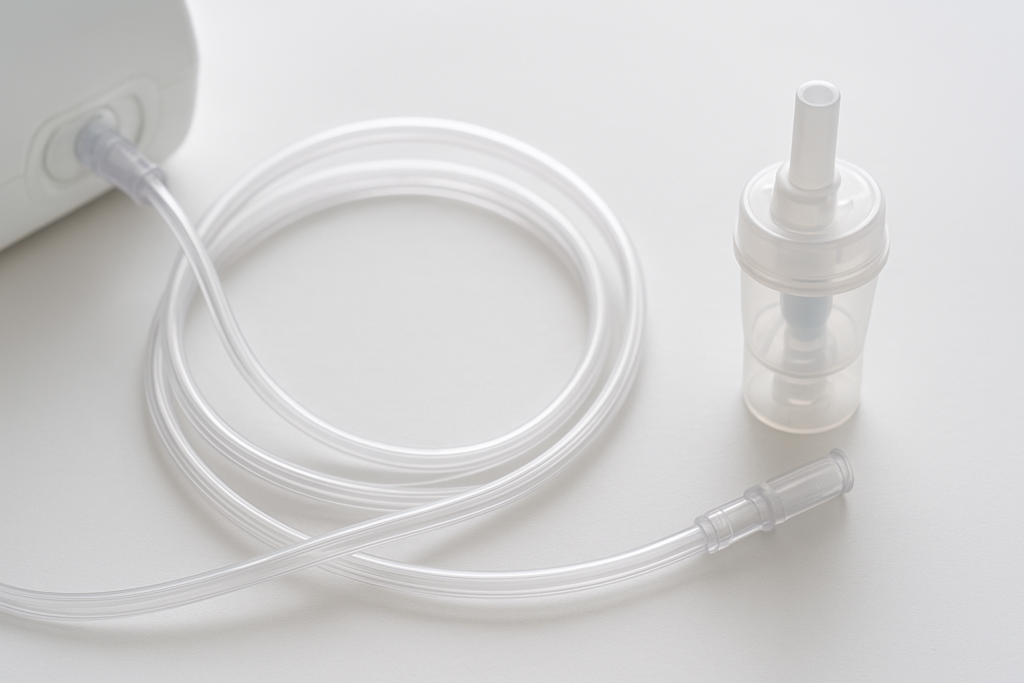
Nebulizer tubing connects the compressor to the medication cup and helps move air through the system during treatment. Over time, moisture, dust, and medication residue can collect inside or around the tubing, especially if it is stored damp or handled often.
Routine care can help keep the equipment cleaner, reduce buildup, and support consistent performance. It is also important to remember that tubing care is different from cleaning the mask, mouthpiece, or medication cup. If you need guidance on those parts, see how to clean a nebulizer mask and how to clean a nebulizer mouthpiece.
What you need before you start
- Mild dish soap or a manufacturer-approved cleaner
- Clean warm water
- A clean towel or drying rack
- Optional: distilled water for a final rinse if your device maker recommends it
- Your nebulizer manual for the exact cleaning instructions
If you are not sure which parts are washable, check the manual before using any cleaning method. That step matters more than any generic online advice.
Step-by-step: how to clean nebulizer tubing
- Disconnect the tubing from the compressor and medication cup.
- Inspect it for visible moisture, cloudiness, cracks, stiffness, odor, or buildup.
- Check the manual to confirm whether the tubing is washable. If it is not washable, follow the replacement guidance instead.
- If the tubing is washable, rinse it with warm water and a small amount of mild soap.
- Rinse thoroughly so no soap residue remains inside or on the surface.
- Shake out excess water and hang or lay the tubing flat to air-dry completely.
- Reassemble the nebulizer only when every part is fully dry.
A simple rule: if the tubing still feels damp, it is not ready to use or store.
What not to do when cleaning tubing
- Do not use harsh chemicals, bleach, or abrasive cleaners unless the manufacturer specifically approves them.
- Do not boil tubing unless the manufacturer explicitly says it is safe.
- Do not put tubing in a dishwasher or microwave.
- Do not store tubing while it is damp.
- Do not share tubing between users.
These shortcuts can damage the tubing or leave it unsuitable for use. When in doubt, replacement is usually safer than guessing.
How often to clean, disinfect, and replace tubing
| Task | General guidance |
|---|---|
| Inspect | Check after each use for moisture, odor, residue, or damage. |
| Clean | Only clean if the manual says the tubing is washable, and follow the device-specific method. |
| Disinfect | Only if the manufacturer provides approved disinfection instructions. |
| Replace | Replace sooner if the tubing is cracked, cloudy, stiff, moldy, or no longer works properly. |
Cleaning schedules can vary by brand, model, and care setting. If your nebulizer is used in a home oxygen setup or a more sensitive infection-control environment, ask a clinician or manufacturer for the correct routine.
How to dry and store nebulizer tubing properly
Drying is one of the most important parts of tubing care. After cleaning, let the tubing air-dry in a clean, dust-free area. Do not reconnect it until it is completely dry inside and out.
- Keep tubing away from direct heat and sunlight if the manual warns against it.
- Store it in a clean, dry container or bag once fully dry.
- Avoid tight coiling if it creates kinks or stress on the tubing.
Trapped moisture is a common reason tubing develops odor or visible film, so a full dry time is worth the wait.
Troubleshooting common tubing problems
- Water trapped inside: Disconnect the tubing, shake out excess moisture, and let it air-dry longer in a clean area.
- Musty smell or visible film: If washing is allowed, clean again using the approved method. If the smell remains, replace the tubing.
- Poor airflow: Check for kinks, moisture, cracks, or blockage. Damaged tubing should be replaced.
- Cloudiness, stiffness, or mold: Stop using the tubing and replace it immediately.
If the tubing does not look or smell right after cleaning and drying, it is usually better to replace it than to keep using it.
When to ask a pharmacist, clinician, or manufacturer for help
Reach out for guidance if the cleaning instructions are unclear or conflict with advice you find online. It is also a good idea to ask for help if the tubing is used for a child, part of a home oxygen setup, or part of a more sensitive infection-control routine.
You should also ask if recurring contamination keeps coming back, if respiratory symptoms persist, or if replacement parts are hard to source and compatibility is uncertain. For broader maintenance guidance, see nebulizer cleaning schedule and when to replace nebulizer parts.
Quick answers about nebulizer tubing care
- Can I wash nebulizer tubing with soap and water?
- Only if the manufacturer says the tubing is washable. Some tubing is meant to be replaced rather than washed, so always check the device instructions first.
- How do I dry nebulizer tubing after cleaning?
- Shake out excess water and let it air-dry completely in a clean area. Do not reattach or store it until every part is fully dry.
- How often should nebulizer tubing be replaced?
- Replacement timing depends on the brand, how often it is used, and its condition. Replace it sooner if it becomes cracked, cloudy, stiff, or contaminated.
- Can I disinfect nebulizer tubing?
- Only if the manufacturer specifically allows disinfection. Many tubing types should not be boiled or exposed to strong chemicals.
- Why does my nebulizer tubing smell bad?
- A bad smell can come from trapped moisture, residue, or contamination. If cleaning and full drying do not fix it, the tubing may need to be replaced.
Related guides
Final takeaway
The safest approach to how to clean nebulizer tubing is simple: check the manual first, clean only if the tubing is meant to be washed, dry it completely, and replace it when it shows signs of wear or contamination. When instructions conflict or symptoms persist, ask a pharmacist, clinician, or the manufacturer for help.
Check your nebulizer manual, clean the tubing only as directed, and replace any worn or damaged parts to keep treatments safe and effective.
Comparison snapshot

A Simple Technique People Use Before Bed
A short routine designed to help your body relax and unwind naturally.
- ✔ Easy to learn and takes only a few minutes
- ✔ No equipment or supplements required
- ✔ Popular among people struggling to relax at night
| Product | Rating | Reviews | Availability |
|---|---|---|---|
| Women’s VL Court 3.0 Sneaker | 4.5 | 12,700 | Available from Amazon |
| Men's 608 V5 Casual Comfort Cross Trainer | 4.6 | 89,300 | Available from Amazon |
| Men's Charged Assert 10 Shoes | 4.6 | 22,600 | Available from Amazon |
| Nike Men's Air Monarch IV Training/Workout Shoes | 4.4 | 30,000 | Available from Amazon |
| Mens Run Falcon 5 | 4.5 | 3,700 | Available from Amazon |
Pros and cons
Pros
- Clearer shortlist for how to clean nebulizer tubing.
- Helps compare trade-offs before buying.
- Includes editorial review checkpoints.
Cons
- Pricing and availability should be verified on Amazon.
- Best choice depends on your use case.
- Product listings may change after publication.
Frequently asked questions
Can I wash nebulizer tubing with soap and water?
Only if the manufacturer says the tubing is washable. Some tubing is meant to be replaced rather than washed, so always check the device instructions first.
How do I dry nebulizer tubing after cleaning?
Shake out excess water and let it air-dry completely in a clean area. Do not reattach or store it until every part is fully dry.
How often should nebulizer tubing be replaced?
Replacement timing depends on the brand, how often it is used, and its condition. Replace it sooner if it becomes cracked, cloudy, stiff, or contaminated.
Can I disinfect nebulizer tubing?
Only if the manufacturer specifically allows disinfection. Many tubing types should not be boiled or exposed to strong chemicals.
Why does my nebulizer tubing smell bad?
A bad smell can come from trapped moisture, residue, or contamination. If cleaning and full drying do not fix it, the tubing may need to be replaced.
How to choose how to clean nebulizer tubing
- Define your requirements
- Compare credible options
- Check current availability and terms
- Choose the best fit for your budget