
Recommended picks
This article may include affiliate links. If you click and buy, we may earn a commission at no extra cost to you.

4.6 rating 22,600 reviews
Check on Amazon
4.6 rating 89,300 reviews
Check on Amazon
4.4 rating 9,200 reviews
Check on AmazonQuick answer
Focus on low-risk, clinician-friendly breathing exercises that can help improve breathing efficiency, reduce breathlessness, and support daily function while emphasizing safety, pacing, and when to seek medical advice.
Key takeaways
- What breathing exercises are safest for damaged lungs?
- Can breathing exercises help after pneumonia, COVID-19, or smoking-related lung damage?
- How often should I do breathing exercises for lung recovery?
- What should I avoid if breathing makes me dizzy or short of breath?
Gentle Breathing Techniques to Support Recovery After Lung Damage
A practical guide for people managing shortness of breath, reduced stamina, or post-illness lung irritation
If you’re looking for breathing exercises for damaged lungs, the safest place to start is with gentle, controlled techniques that support comfort, pacing, and day-to-day function. These exercises may help you feel less breathless and more in control, but they do not repair structural lung damage. If your symptoms are severe, changing quickly, or tied to a chronic lung condition, check with a clinician before beginning.
Understanding damaged lungs and what breathing exercises can do
“Damaged lungs” can mean different things depending on the cause. Some people are recovering from pneumonia, COVID-19, surgery, or a chest injury. Others are living with long-term conditions such as COPD, pulmonary fibrosis, or smoking-related lung disease. Inflammation, scarring, airway narrowing, and reduced lung elasticity can all make breathing feel harder.
Breathing exercises cannot reverse permanent damage, but they may support better breath control, reduce panic during shortness of breath, improve ventilation efficiency, and make everyday activities feel more manageable. Results vary widely, so the goal is comfort and function rather than a quick fix.
Safety first: when to get medical clearance
Before starting any new routine, it’s wise to speak with a clinician if you have severe shortness of breath, chest pain, oxygen use, a recent hospitalization, or a chronic lung condition that has not been reviewed recently. People with asthma, COPD, pulmonary fibrosis, or recent surgery may need individualized guidance.
Stop and seek urgent medical care if you notice blue lips, fainting, coughing blood, worsening wheeze, fever with breathing decline, or a sudden change in how hard it is to breathe. If an exercise makes you dizzy, panicked, or more short of breath, pause and return to a gentler pace only if symptoms settle.
Pursed-lip breathing for better airflow control
Pursed-lip breathing is one of the simplest techniques for breathlessness. It slows exhalation, which may help reduce air trapping and make breathing feel more controlled.
- Relax your shoulders and sit upright or stand comfortably.
- Inhale gently through your nose for about 2 counts.
- Purse your lips as if you’re about to whistle.
- Exhale slowly and gently through pursed lips for about 4 counts, making the exhale longer than the inhale.
- Repeat for a few breaths until you feel calmer.
This can be especially useful while walking, climbing stairs, bending, or recovering from a burst of activity. Avoid forcing the breath, puffing your cheeks, or blowing out too hard. The exhale should feel smooth, not strained.
Diaphragmatic breathing to reduce accessory muscle strain
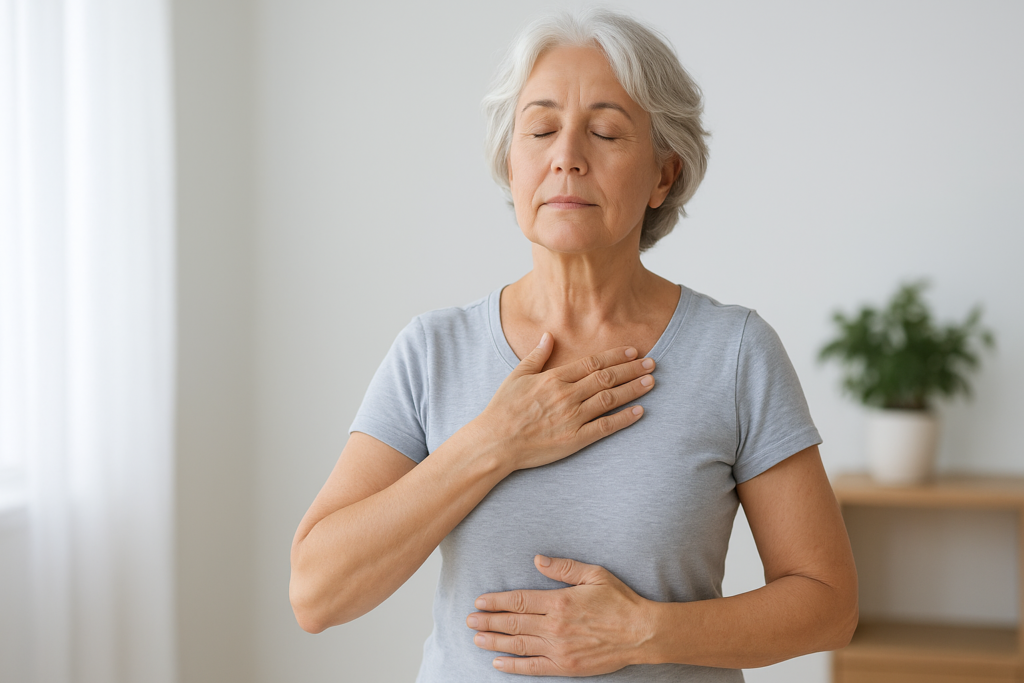
Diaphragmatic breathing, often called belly breathing, encourages the diaphragm to do more of the work so the neck and chest muscles can relax. Some people find it easier at rest than during activity, especially at first.
- Lie on your back with knees bent, or sit supported in a chair.
- Place one hand on your upper chest and the other on your belly.
- Inhale slowly through your nose and let your belly rise gently.
- Exhale through your mouth or nose and let your belly fall naturally.
- Keep the upper chest as still as possible without forcing it.
If the technique feels awkward, that’s normal. It often takes practice before it feels natural. Keep the breaths small and comfortable, especially if you’re recovering from illness or feeling fatigued.
Segmental or localized breathing for chest expansion
Segmental breathing is a gentle awareness exercise that directs attention toward a specific area of the chest or ribs. It may be helpful after surgery or when one side of the chest feels tighter than the other.
To try it, place your hands lightly on the area that feels restricted, then breathe slowly and imagine the breath moving into that space. You can also ask a clinician or respiratory therapist to show you a safe hand placement technique if you’re recovering from a procedure.
The key is comfort. This should never be painful, and you should not press hard on the chest or force a deep inhale.
Breathing with movement: pacing and recovery
For many people, the biggest challenge is not breathing while resting but breathing while moving. Pairing breath control with light activity can help you conserve energy and avoid symptom spikes.
- Exhale on effort: breathe out during the hardest part of a task, such as standing up or lifting a light object.
- Use short intervals: walk or stretch for a brief period, then rest before you feel overwhelmed.
- Plan recovery breaks: pause before symptoms escalate instead of waiting until you’re exhausted.
- Keep intensity low: consistency matters more than pushing harder.
This pacing approach can be useful during daily tasks like showering, dressing, or light housework. If you notice that movement consistently triggers dizziness or chest tightness, slow down and ask a clinician whether a supervised rehab plan would be more appropriate.
Simple daily routine for beginners
If you’re new to breathing exercises for damaged lungs, start small. A few minutes once or twice a day is enough to begin.
- 1 minute of relaxed breathing to settle your pace.
- 2 to 3 minutes of pursed-lip breathing.
- 2 to 3 minutes of diaphragmatic breathing in a comfortable position.
- 1 to 2 minutes of gentle movement with slow, steady breathing.
Track how you feel afterward: energy, breathlessness, dizziness, chest tightness, and recovery time. If the routine feels comfortable for several days, you can gradually extend the time. If symptoms worsen, scale back and reassess.
What to avoid when lungs are damaged
Not every breathing trend is appropriate for compromised lungs. Avoid breath-holding, overexertion, and any exercise that requires you to force deep breaths or push through discomfort.
- Do not continue if you feel dizzy, faint, or panicked.
- Avoid intense breathwork challenges or online routines that promise dramatic results.
- Do not use breathing exercises as a replacement for prescribed inhalers, oxygen, medications, or pulmonary rehab.
- Skip any technique that causes chest pain, worsening wheeze, or a sudden increase in shortness of breath.
For damaged lungs, gentle and repeatable is usually better than intense and unpredictable.
When breathing exercises are not enough
If symptoms persist, worsen, or limit your daily life, breathing exercises may be only one part of the solution. Ongoing shortness of breath, fatigue, cough, or oxygen drops may need medication review, imaging, pulmonary rehabilitation, or specialist evaluation.
That’s especially important after pneumonia, COVID-19, surgery, smoking-related lung injury, or when a chronic condition is changing. A clinician or respiratory therapist can help determine whether your symptoms are expected recovery, a flare-up, or something that needs more urgent attention.
Frequently asked questions
Are breathing exercises safe for damaged lungs?
They can be safe when chosen carefully and done gently, but safety depends on the cause and severity of the lung damage. People with significant symptoms, oxygen needs, or recent illness should ask a clinician first.
Which breathing exercise is best for shortness of breath?
Pursed-lip breathing is often helpful for controlling breathlessness because it slows exhalation and can reduce the feeling of air trapping. Diaphragmatic breathing may also help some people, especially at rest.
How long should I practice each day?
Start with just a few minutes once or twice a day and increase only if it feels comfortable. The best routine is one you can do consistently without worsening symptoms.
Can these exercises help after COVID-19 or pneumonia?
They may help improve breathing control and comfort during recovery, but they do not replace medical care or rehabilitation. If symptoms are persistent or worsening, follow up with a healthcare professional.
When should I stop and get help?
Stop if you feel chest pain, severe dizziness, fainting, blue lips, or a sudden increase in shortness of breath. Seek urgent medical care if symptoms are severe or rapidly worsening.
Helpful next steps
If you want to keep learning, these related guides may help:
- Breathing exercises for lungs
- Pulmonary rehabilitation
- Diaphragmatic breathing
- Pursed-lip breathing
- Shortness of breath causes
- Lung health recovery
Takeaway: gentle breathing exercises may help improve comfort, control, and daily function after lung damage, but they work best as part of a broader care plan. If your breathing feels limited, start with a few gentle techniques and track how your body responds. For ongoing symptoms or a recent lung condition, speak with a healthcare professional before building a routine.
Affiliate disclosure: This article may include affiliate links. If you click and buy, we may earn a commission at no extra cost to you.
Medical disclaimer: This content is for informational purposes only and is not medical advice. Consult a clinician or respiratory therapist for device and medication selection, and always follow manufacturer instructions for cleaning, maintenance, and approved medications.
Comparison snapshot
A Simple Technique People Use Before Bed
A short routine designed to help your body relax and unwind naturally.
- ✔ Easy to learn and takes only a few minutes
- ✔ No equipment or supplements required
- ✔ Popular among people struggling to relax at night
| Product | Rating | Reviews | Availability |
|---|---|---|---|
| Men's Charged Assert 10 Shoes | 4.6 | 22,600 | Available from Amazon |
| Men's 608 V5 Casual Comfort Cross Trainer | 4.6 | 89,300 | Available from Amazon |
| Captain Men's Lace-up Boot | 4.4 | 9,200 | Available from Amazon |
| Boys Girls Shoes Non-Slip Tennis Shoes Fashion Lightweight Breathable Kids Sneakers for Little Kids/Big Kids | 4.5 | 3,500 | Available from Amazon |
| Women's Mary Jane Chunky Low Heels Slingback Pumps Closed Square Toe Wedding Dress Shoes | 4.2 | 527 | Available from Amazon |
Pros and cons
Pros
- Clearer shortlist for breathing exercises for damaged lungs.
- Helps compare trade-offs before buying.
- Includes editorial review checkpoints.
Cons
- Pricing and availability should be verified on Amazon.
- Best choice depends on your use case.
- Product listings may change after publication.
Frequently asked questions
Are breathing exercises safe for damaged lungs?
They can be safe when chosen carefully and done gently, but safety depends on the cause and severity of the lung damage. People with significant symptoms, oxygen needs, or recent illness should ask a clinician first.
Which breathing exercise is best for shortness of breath?
Pursed-lip breathing is often helpful for controlling breathlessness because it slows exhalation and can reduce the feeling of air trapping. Diaphragmatic breathing may also help some people, especially at rest.
How long should I practice each day?
Start with just a few minutes once or twice a day and increase only if it feels comfortable. The best routine is one you can do consistently without worsening symptoms.
Can these exercises help after COVID-19 or pneumonia?
They may help improve breathing control and comfort during recovery, but they do not replace medical care or rehabilitation. If symptoms are persistent or worsening, follow up with a healthcare professional.
When should I stop and get help?
Stop if you feel chest pain, severe dizziness, fainting, blue lips, or a sudden increase in shortness of breath. Seek urgent medical care if symptoms are severe or rapidly worsening.