
Recommended picks
This article may include affiliate links. If you click and buy, we may earn a commission at no extra cost to you.

4.4 rating 340 reviews
Check on Amazon
4.5 rating 5,500 reviews
Check on Amazon
4.6 rating 22,600 reviews
Check on AmazonQuick answer
Step-by-step cleaning guidance focused on safe daily care, drying, replacement timing, and common mistakes to avoid.
Key takeaways
- How often should nebulizer tubing be cleaned?
- Can nebulizer tubing be washed with soap and water?
- Should nebulizer tubing be disinfected or only cleaned?
- How do you dry nebulizer tubing after washing?
How to Clean Nebulizer Tubing Safely and Effectively
A simple maintenance guide for keeping your equipment hygienic, reducing buildup, and helping treatments work as intended.
If you use a nebulizer at home, the tubing is one of the easiest parts to overlook. It does an important job, though: it carries air from the compressor to the medication cup so your treatment can be delivered properly. Because moisture and residue can collect over time, knowing how to clean a nebulizer tubing the right way can help you keep your equipment in better condition.
The key is to follow your device manual first. Some tubing can be cleaned or rinsed, while other tubing should not be washed or submerged at all. When in doubt, use the manufacturer’s instructions as the final word.
What nebulizer tubing does and why cleaning matters

A Simple Technique People Use Before Bed
A short routine designed to help your body relax and unwind naturally.
- ✔ Easy to learn and takes only a few minutes
- ✔ No equipment or supplements required
- ✔ Popular among people struggling to relax at night
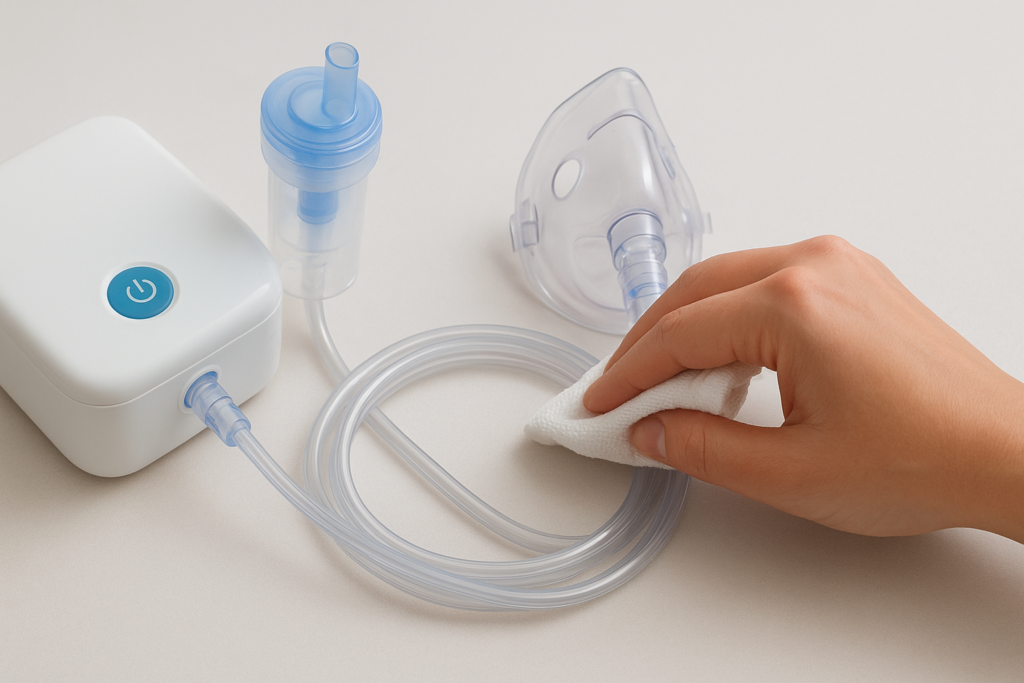
Nebulizer tubing connects the compressor to the medication cup and helps move air through the system during treatment. If moisture, dust, or residue builds up inside or around the tubing, it may affect hygiene and could interfere with normal function.
Good tubing care supports the rest of your nebulizer routine, but it does not replace cleaning the mask or mouthpiece and medication cup. Those parts need their own regular care as well.
What you need before you start
- Mild dish soap or an approved cleaning solution, if your manual allows it
- A clean sink or basin
- Warm water
- A lint-free towel
- A clean, dry area for air-drying
- Your device instructions, if available
Step-by-step: how to clean nebulizer tubing
- Disconnect the tubing from the compressor and the medication cup.
- Check the manual to confirm whether your tubing is washable. Some tubing is not meant to be submerged or rinsed.
- If your model allows washing, clean it only as directed by the manufacturer.
- If soap is approved, use only mild soap and warm water.
- Do not force water through the tubing unless the instructions specifically say that is safe.
- Shake out excess water and prepare it for air-drying.
If the tubing is not designed to be washed, do not improvise with a different method. In that case, replacement may be the safer option if the tubing looks dirty, worn, or contaminated.
How to dry tubing the right way
After cleaning, let the tubing air-dry completely before reconnecting or storing it. Trapped moisture can encourage buildup, so drying matters just as much as washing.
- Hang it or lay it flat in a clean area
- Keep it away from direct heat
- Avoid sunlight unless the manufacturer says otherwise
- Do not use a hair dryer unless the device instructions specifically allow it
- Store it only when it is fully dry inside and out
How often to clean and replace nebulizer tubing
Cleaning frequency varies by model, so start with the device manual. Some users may only need periodic cleaning, while others may be told to wipe or rinse parts on a set schedule.
Replacement timing also depends on the manufacturer, but tubing should be replaced sooner if it becomes cracked, cloudy, stiff, discolored, moldy, or no longer fits securely.
When tubing shows wear, replacement is usually better than trying to clean it more aggressively.
Mistakes to avoid
- Using bleach, alcohol, or other harsh chemicals unless the manufacturer explicitly approves them
- Boiling tubing or putting it in a dishwasher without guidance from the device manual
- Reconnecting tubing while it is still damp
- Ignoring odor, residue, cloudiness, or visible wear
- Mixing cleaning methods that conflict with the instructions for your specific nebulizer
When to stop using the tubing and get a replacement
Stop using the tubing and replace it if you notice any of the following:
- Visible mold
- Persistent odor
- Sticky residue that does not come off
- Cracks, holes, or loss of flexibility
- Repeated moisture that will not dry properly
- Poor airflow or a loose fit that affects treatment delivery
Extra hygiene tips for nebulizer care
- Clean the medication cup, mask or mouthpiece, and other washable parts regularly
- Wash your hands before handling equipment
- Store the nebulizer in a clean, dust-free place
- Use only the medications and accessories recommended for your device
Frequently asked questions
Can I wash nebulizer tubing with soap and water?
Only if the manufacturer says the tubing is washable. Some tubing should not be submerged or washed, so always check the device instructions first.
How do I dry nebulizer tubing after cleaning?
Let it air-dry completely in a clean area. Avoid using heat unless the manufacturer specifically allows it, and do not reconnect the tubing until it is fully dry.
How often should nebulizer tubing be replaced?
Replace it according to the manufacturer’s schedule or sooner if it becomes cracked, cloudy, stiff, discolored, or moldy.
Can I use vinegar to clean nebulizer tubing?
Only if the device instructions allow it. Many manufacturers recommend specific cleaning methods, and vinegar may not be suitable for all tubing materials.
What if water gets trapped inside the tubing?
Disconnect it and allow it to air-dry completely. If moisture keeps returning or the tubing looks damaged, replace it.
Helpful next steps
If you want to keep your whole setup in good shape, it helps to follow a simple routine for every part of the device. You may also want to review related guides on cleaning the nebulizer, mask, mouthpiece, and cleaning schedule.
- How to clean a nebulizer
- How to clean nebulizer mask
- How to clean nebulizer mouthpiece
- Nebulizer cleaning schedule
- When to replace nebulizer parts
- Nebulizer care guide
Bottom line: check your nebulizer manual, clean only the parts approved by the manufacturer, and replace tubing at the first sign of wear to help keep treatments safe and effective.
Affiliate disclosure: This article may include affiliate links. If you click and buy, we may earn a commission at no extra cost to you.
Medical disclaimer: This content is for informational purposes only and is not medical advice. Consult a clinician or respiratory therapist for device and medication selection, and always follow manufacturer instructions for cleaning, maintenance, and approved medications.
Recommended guidance: This guide is for general educational purposes only and does not replace your nebulizer’s user manual or advice from a healthcare professional. Cleaning and replacement instructions vary by device, so always follow the manufacturer’s guidance first.
Comparison snapshot
| Product | Rating | Reviews | Availability |
|---|---|---|---|
| Womens Sneakers Tennis Shoes: Comfortable Breathable Non Slip Casual Athletic Walking Shoes for Gym Workout | 4.4 | 340 | Available from Amazon |
| Women's Charged Surge 4 Running Shoe | 4.5 | 5,500 | Available from Amazon |
| Men's Charged Assert 10 Shoes | 4.6 | 22,600 | Available from Amazon |
| Men's 608 V5 Casual Comfort Cross Trainer | 4.6 | 89,300 | Available from Amazon |
| Reebok Nano X5 Mens Shoes, Cross Training and Light Running Sneakers for Men | 4.5 | 463 | Available from Amazon |
Pros and cons
Pros
- Clearer shortlist for how to clean a nebulizer tubing.
- Helps compare trade-offs before buying.
- Includes editorial review checkpoints.
Cons
- Pricing and availability should be verified on Amazon.
- Best choice depends on your use case.
- Product listings may change after publication.
Frequently asked questions
Can I wash nebulizer tubing with soap and water?
Only if the manufacturer says the tubing is washable. Some tubing should not be submerged or washed, so always check the device instructions first.
How do I dry nebulizer tubing after cleaning?
Let it air-dry completely in a clean area. Avoid using heat unless the manufacturer specifically allows it, and do not reconnect the tubing until it is fully dry.
How often should nebulizer tubing be replaced?
Replace it according to the manufacturer’s schedule or sooner if it becomes cracked, cloudy, stiff, discolored, or moldy.
Can I use vinegar to clean nebulizer tubing?
Only if the device instructions allow it. Many manufacturers recommend specific cleaning methods, and vinegar may not be suitable for all tubing materials.
What if water gets trapped inside the tubing?
Disconnect it and allow it to air-dry completely. If moisture keeps returning or the tubing looks damaged, replace it.
How to choose how to clean a nebulizer tubing
- Define your requirements
- Compare credible options
- Check current availability and terms
- Choose the best fit for your budget