
Recommended picks
This article may include affiliate links. If you click and buy, we may earn a commission at no extra cost to you.

4.6 rating 14,100 reviews
Check on Amazon
4.6 rating 5,200 reviews
Check on Amazon
4.5 rating 12,800 reviews
Check on AmazonQuick answer
A clear, device-specific cleaning routine that helps users prevent contamination, protect performance, and avoid common mistakes with portable nebulizers.
Key takeaways
- How often should a portable nebulizer be cleaned?
- What parts of a portable nebulizer can be washed?
- Can you use soap, vinegar, or alcohol on a nebulizer?
- How do you disinfect a portable nebulizer safely?
How to Clean a Portable Nebulizer Safely and Thoroughly
A practical step-by-step guide for keeping your device hygienic, working properly, and ready for daily use
If you use a portable nebulizer regularly, a simple cleaning routine can help keep the device in good condition and reduce the buildup of medication residue, moisture, and grime. The exact steps vary by model, so your user manual should always come first. This guide walks through a safe, practical process for cleaning, drying, and storing a portable nebulizer without damaging sensitive parts.
Why portable nebulizer cleaning matters
Portable nebulizers are small, convenient, and often used on the go, which makes routine care especially important. After each use, tiny amounts of medication and moisture can remain in the cup, mask, or mouthpiece. Over time, that residue can affect how clean the device looks and how well it performs.
- Reduces buildup of medication residue and moisture
- Helps lower the risk of bacteria and mold growth
- Supports consistent mist output and device performance
- Extends the life of the mask, cup, and mouthpiece
What you need before you start
Before cleaning, gather a few simple supplies so you can work quickly and avoid cross-contamination.
- Mild dish soap and clean warm water
- A clean bowl or basin for washing parts
- A lint-free towel or paper towel
- A clean, dry area for air-drying
- Manufacturer instructions for your specific model
If you are missing the manual, look up the exact model number before using any cleaning method. Portable nebulizers are not all built the same.
Which parts can be cleaned and which should stay dry
Start by identifying the removable parts and the components that should never be exposed to water. This is one of the most important steps, especially for compact battery-powered devices.
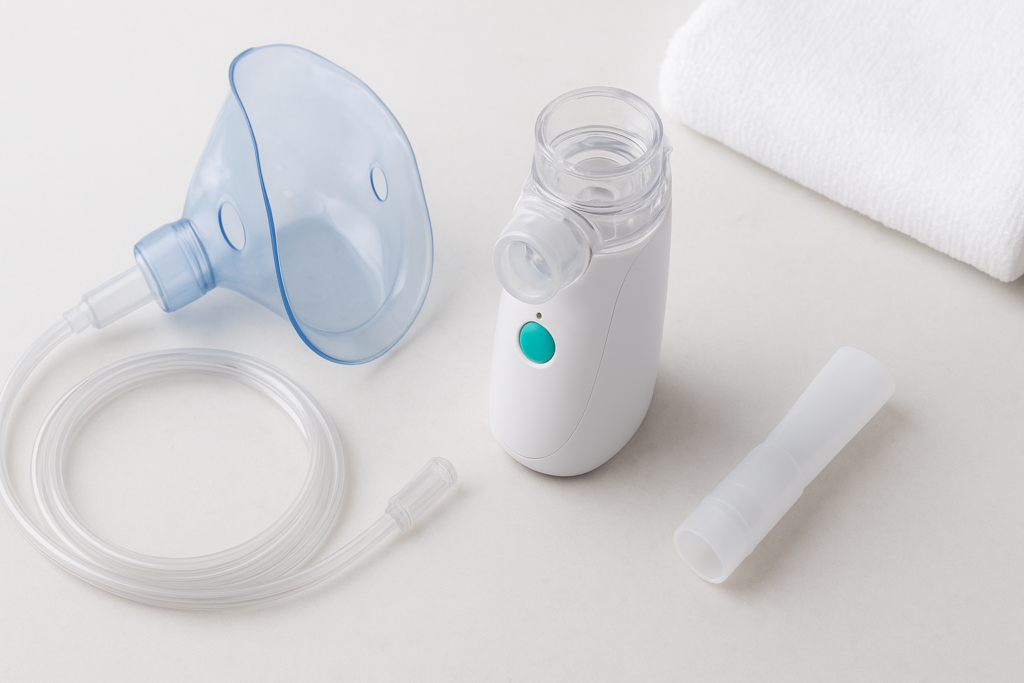
- Identify removable parts such as the medication cup, mouthpiece, mask, and tubing if applicable
- Keep the compressor, battery compartment, and electrical components dry
- Check whether mesh or ultrasonic components need special handling
- Follow the user manual for model-specific restrictions
Some portable nebulizers use mesh technology or other delicate internal parts that can be damaged by soaking, scrubbing, or forcing water through them. If your model includes a mesh unit, treat it as a special case and follow the manufacturer’s instructions exactly.
Step-by-step cleaning process
- Turn off and unplug the device before disassembly.
- Disassemble only the removable parts.
- Wash washable parts with warm water and mild soap.
- Rinse thoroughly to remove all soap residue.
- Shake off excess water and place parts on a clean surface to air-dry.
For most users, this basic routine is enough for everyday cleaning. Use gentle handling throughout, and do not force parts apart if they are stuck. If a piece does not come off easily, check the manual rather than pulling harder.
How to disinfect without damaging the device
Cleaning and disinfecting are not the same thing. Cleaning removes visible residue and dirt, while disinfecting uses a manufacturer-approved method to reduce germs on certain washable parts. Not every portable nebulizer needs the same disinfection schedule, and not every part can be disinfected safely.
- Use only methods approved by the manufacturer
- Understand the difference between cleaning and disinfecting
- Avoid harsh chemicals unless the manual specifically allows them
- Never submerge electronic components or mesh units unless instructed
Do not assume that vinegar, alcohol, or boiling water are safe for your model. Those methods may damage plastic, seals, or mesh components, and they are not universally recommended. If your clinician or device maker gives a disinfection schedule, follow that schedule rather than improvising.
Drying and reassembly best practices
Drying is just as important as washing. Trapped moisture can leave behind odor, residue, or a sticky film, and it can also make reassembly messier than it needs to be.
- Allow all parts to dry completely before reassembly
- Inspect for trapped moisture in crevices or valves
- Reassemble with clean hands on a sanitized surface
- Store the device in a dust-free container or case
If you are in a hurry, resist the temptation to wipe and reassemble immediately. Let parts air-dry fully, especially around small openings, seals, and connectors.
How often to clean a portable nebulizer
In most cases, the removable parts should be cleaned after each use. That simple habit helps keep residue from building up and makes the next session easier to manage.
- Clean after each use unless the manufacturer says otherwise
- Disinfect on the schedule recommended by the device maker or clinician
- Replace worn or discolored parts as needed
- Increase cleaning frequency during illness or heavy use
If you use the device multiple times a day, a quick rinse and full wash routine may be especially helpful. Still, the manual should always guide the exact timing and method.
Common mistakes to avoid
Most cleaning problems come from using methods that are too aggressive or reassembling the device too soon.
- Using boiling water or abrasive scrubbers on delicate parts
- Reusing damp components before they are fully dry
- Mixing cleaning chemicals
- Ignoring tubing, filters, or small seals that collect residue
Another common mistake is treating every portable nebulizer the same. A compressor-style unit, a mesh nebulizer, and an ultrasonic model may all need different care. When in doubt, pause and check the manual.
When to replace parts or get help
Even with good cleaning habits, parts wear out over time. Replacement is often the safest option when a component no longer fits properly or shows visible damage.
- Look for cracks, cloudiness, warping, or persistent odor
- Replace filters, masks, and cups according to the manual
- Contact the manufacturer if mist output drops or parts stop fitting properly
- Ask a healthcare professional if you are unsure about infection-control steps
If the nebulizer starts sounding different, producing less mist, or leaving more residue than usual, stop using it until you can inspect it. A small part failure can affect performance more than many users expect.
Quick answers to common cleaning questions
How often should a portable nebulizer be cleaned?
In most cases, clean the removable parts after each use. Follow the manufacturer’s schedule for any disinfection steps.
What parts of a portable nebulizer can be washed?
Usually the medication cup, mouthpiece, and mask are washable, and some models may allow tubing cleaning as well. Keep the compressor, battery area, and other electrical components dry.
Can you use soap, vinegar, or alcohol on a nebulizer?
Mild dish soap is commonly used for washable parts. Vinegar or alcohol should only be used if the manufacturer specifically approves them for your model.
How do you disinfect a portable nebulizer safely?
Use only the disinfection method listed in the manual or recommended by your clinician. Do not guess or substitute a stronger chemical.
How do you dry and store a nebulizer after cleaning?
Let all parts air-dry completely, then store them in a clean, dust-free case or container.
What should you do if the nebulizer has residue or a bad smell?
Reclean the washable parts, make sure everything dries fully, and replace any part that still smells, looks damaged, or seems worn out.
Helpful internal resources
Final takeaway
A portable nebulizer stays easier to use when you clean it consistently, dry it completely, and follow the manufacturer’s instructions for every model-specific detail. Keep the routine simple, avoid harsh cleaning methods, and replace worn parts before they become a problem.
Need a cleaner, longer-lasting device? Follow this routine after every use and check your model’s manual for any special care instructions.
Comparison snapshot

A Simple Technique People Use Before Bed
A short routine designed to help your body relax and unwind naturally.
- ✔ Easy to learn and takes only a few minutes
- ✔ No equipment or supplements required
- ✔ Popular among people struggling to relax at night
| Product | Rating | Reviews | Availability |
|---|---|---|---|
| Men's KnitFlex Breeze Mesh Sneakers Oxfords Lace-Up Lightweight Casual Walking Shoes | 4.6 | 14,100 | Available from Amazon |
| Nike Women's Court Vision Low Next Nature Shoes | 4.6 | 5,200 | Available from Amazon |
| Women’s VL Court 3.0 Sneaker | 4.5 | 12,800 | Available from Amazon |
| Mens Running Shoes Slip On Tennis Walking Sneakers Workout Athletic Lightweight Casual Sport Shoes | 4.3 | 915 | Available from Amazon |
| Project Cloud Fashion Sneakers for Women 2026 – Lace-Up Shoes Trendy Women Sneakers with Memory Foam Insole Women's Fashion Sneakers Non-Slip Womens Shoes (Irita) | 4.0 | 2,300 | Available from Amazon |
Pros and cons
Pros
- Clearer shortlist for how to clean a portable nebulizer.
- Helps compare trade-offs before buying.
- Includes editorial review checkpoints.
Cons
- Pricing and availability should be verified on Amazon.
- Best choice depends on your use case.
- Product listings may change after publication.
Frequently asked questions
How often should I clean a portable nebulizer?
In most cases, the removable parts should be cleaned after each use. Disinfection may be needed less often, depending on the manufacturer’s instructions and your clinician’s guidance.
Can I wash nebulizer parts with regular dish soap?
Yes, mild dish soap is commonly used for washable parts. Rinse very well so no soap residue remains, and always check the device manual first.
Can I put the nebulizer in the dishwasher?
Only if the manufacturer specifically says it is dishwasher-safe. Many portable nebulizer parts are not designed for high heat or harsh cycles.
How do I clean the mesh part of a portable nebulizer?
Mesh components usually need special care. Follow the manufacturer’s cleaning instructions closely and avoid scrubbing or soaking unless approved.
What should I do if my nebulizer smells bad after cleaning?
A lingering smell can mean residue, trapped moisture, or mold. Reclean the washable parts, let everything dry completely, and replace any part that still smells or looks damaged.
How to choose how to clean a portable nebulizer
- Define your requirements
- Compare credible options
- Check current availability and terms
- Choose the best fit for your budget