
Recommended picks
This article may include affiliate links. If you click and buy, we may earn a commission at no extra cost to you.

4.6 rating 14,100 reviews
Check on Amazon
4.6 rating 6,300 reviews
Check on Amazon
4.4 rating 15,000 reviews
Check on AmazonQuick answer
Step-by-step hygiene guidance focused on safe cleaning, drying, and maintenance of the mouthpiece to support effective nebulizer use.
Key takeaways
- How often should a nebulizer mouthpiece be cleaned?
- What is the safest way to wash a nebulizer mouthpiece?
- Can you use soap, vinegar, or boiling water on a nebulizer mouthpiece?
- How do you dry and store the mouthpiece after cleaning?
Nebulizer Mouthpiece Cleaning Guide: Safe Steps for Better Breathing
A practical routine for patients and caregivers who want to reduce buildup, protect hygiene, and keep treatments working properly.
Keeping the mouthpiece clean is one of the simplest ways to maintain your nebulizer setup. A quick routine after each use can help remove residue, limit moisture buildup, and keep the part in good working condition. Just as important, the safest method is always the one approved by your device manual or clinician.
Why mouthpiece cleaning matters
The mouthpiece is the part you use most directly, so it can collect medication residue, saliva, and moisture over time. Regular cleaning helps keep that buildup from lingering and supports a more hygienic treatment routine.
- Prevents buildup of medication residue, saliva, and moisture
- Helps reduce contamination risk between treatments
- Supports consistent airflow and proper medication delivery
- Extends the life of the mouthpiece and connected parts
What you need before you start
Gather everything first so you can clean the mouthpiece without rushing or handling it with dirty hands.
- Mild dish soap and warm water
- A clean basin or bowl
- A lint-free towel or paper towel
- Optional: white vinegar for occasional disinfection if recommended by the manufacturer
- Clean hands and a dry storage area
If your nebulizer manual gives specific cleaning supplies or methods, use those instructions instead of a general routine.
Step-by-step: how to clean the mouthpiece
- Wash your hands first. Clean hands help keep the mouthpiece from picking up new germs during handling.
- Detach the mouthpiece. Remove it from the nebulizer tubing and medication cup according to your device setup.
- Rinse visible residue. Use warm water to wash away any leftover medication or moisture.
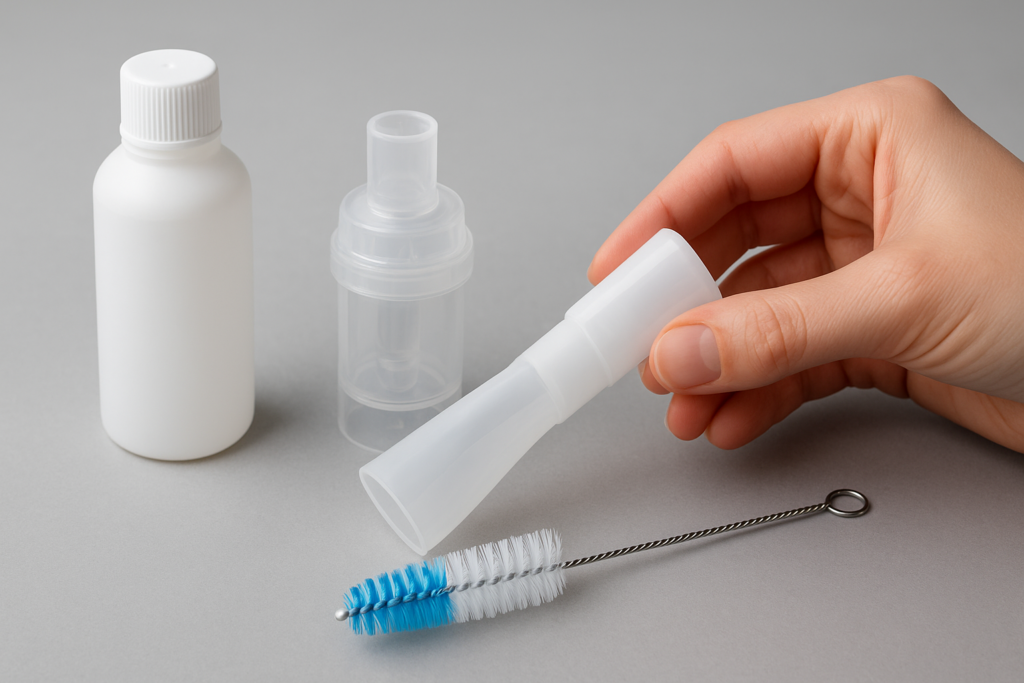
- Wash gently. Clean the mouthpiece with mild soap and warm water. Avoid scrubbing with abrasive pads or brushes that could scratch the plastic.
- Rinse thoroughly. Make sure all soap is removed so no film remains on the part.
- Dry properly. Shake off excess water and place the mouthpiece on a clean surface to air-dry completely.
For most users, this after-use routine is the easiest way to keep the mouthpiece ready for the next treatment.
How to disinfect safely when needed
Some devices call for occasional disinfection in addition to routine washing. If that applies to your model, follow the manufacturer’s instructions exactly.
- Follow the device manufacturer’s instructions first
- Use only approved disinfecting methods for the specific material
- Avoid harsh chemicals that may damage plastic parts
- Rinse well after any disinfecting step if required
- Let the mouthpiece dry completely before reassembly
Do not assume that a method safe for one nebulizer part is safe for another. Materials and designs vary, and heat or chemicals can warp some components.
Drying and storage best practices
Drying matters as much as washing. Leaving moisture trapped inside the mouthpiece can create an environment that is harder to keep clean.
- Air-dry completely before putting parts away
- Store in a clean, dry container or sealed bag if recommended
- Keep away from sinks, damp counters, and bathroom humidity
- Do not wipe with a used dish towel or cloth that may carry germs
If you need to dry the part faster, use only a clean, lint-free towel and make sure the mouthpiece is fully dry before reassembly.
Common mistakes to avoid
A few simple missteps can damage the mouthpiece or make it harder to keep clean.
- Using boiling water unless the manufacturer says it is safe
- Skipping the rinse after soap or disinfectant
- Reassembling parts while still wet
- Sharing mouthpieces between users
- Ignoring cracks, cloudiness, or residue that will not wash off
If you are unsure whether a cleaning method is safe, check the manual, then ask a pharmacist, clinician, or respiratory therapist if needed.
When to replace the mouthpiece
Even with good care, mouthpieces do not last forever. Replace the part if it no longer looks or functions as it should.
- Visible damage, warping, or discoloration
- Persistent odor or residue after cleaning
- Loose fit or reduced performance
- Replacement schedule from the manufacturer or clinician
Replacement timing varies by model and how often the nebulizer is used, so the device manual should be your first reference.
Quick answers about cleaning a nebulizer mouthpiece
How often should I clean a nebulizer mouthpiece?
Clean it after each use unless your device instructions say otherwise. Regular cleaning helps prevent residue buildup and contamination.
Can I wash it with regular dish soap?
Yes, a mild dish soap is usually appropriate for routine cleaning, but always check the manufacturer’s instructions for your specific device.
Is vinegar safe for disinfecting a nebulizer mouthpiece?
Sometimes, but only if the manufacturer allows it. Some materials can be damaged by vinegar or other disinfecting solutions.
Can I put the mouthpiece in the dishwasher or boil it?
Only if the manufacturer specifically says it is safe. Heat can warp some plastic parts and affect fit or performance.
How do I know when it needs replacing?
Replace it if it becomes cracked, cloudy, warped, hard to clean, or no longer fits securely.
Helpful related guides
Simple routine to remember
After each treatment, wash your hands, remove the mouthpiece, rinse away residue, wash with mild soap and warm water, rinse again, and let it air-dry fully on a clean surface. If your manual calls for disinfection, use only the approved method for your device and material.
That small routine can make daily nebulizer care easier and help keep the mouthpiece in better shape over time.
Final takeaway
The safest answer to how to clean a nebulizer mouthpiece is usually the simplest one: follow the device manual, clean after use, rinse thoroughly, dry completely, and replace worn parts when needed. If instructions ever conflict, defer to the manufacturer or a clinician.
Check your nebulizer manual for approved cleaning methods, then follow a simple after-use routine to keep the mouthpiece hygienic and ready for the next treatment.
Affiliate disclosure: This article may include affiliate links. If you click and buy, we may earn a commission at no extra cost to you.
Medical disclaimer: This content is for informational purposes only and is not medical advice. Consult a clinician or respiratory therapist for device and medication selection, and always follow manufacturer instructions for cleaning, maintenance, and approved medications.
Comparison snapshot

A Simple Technique People Use Before Bed
A short routine designed to help your body relax and unwind naturally.
- ✔ Easy to learn and takes only a few minutes
- ✔ No equipment or supplements required
- ✔ Popular among people struggling to relax at night
| Product | Rating | Reviews | Availability |
|---|---|---|---|
| Men's KnitFlex Breeze Mesh Sneakers Oxfords Lace-Up Lightweight Casual Walking Shoes | 4.6 | 14,100 | Available from Amazon |
| Men's Daily 4.0 Shoe | 4.6 | 6,300 | Available from Amazon |
| Women's Slip On Canvas Sneaker Low Top Casual Walking Shoes Classic Comfort Flat Fashion Sneakers | 4.4 | 15,000 | Available from Amazon |
| Women's Charged Surge 4 Running Shoe | 4.5 | 5,600 | Available from Amazon |
| Mens Running Shoes Slip On Tennis Walking Sneakers Workout Athletic Lightweight Casual Sport Shoes | 4.3 | 916 | Available from Amazon |
Pros and cons
Pros
- Clearer shortlist for how to clean a nebulizer mouthpiece.
- Helps compare trade-offs before buying.
- Includes editorial review checkpoints.
Cons
- Pricing and availability should be verified on Amazon.
- Best choice depends on your use case.
- Product listings may change after publication.
Frequently asked questions
How often should I clean a nebulizer mouthpiece?
Clean it after each use unless your device instructions say otherwise. Regular cleaning helps prevent residue buildup and contamination.
Can I wash it with regular dish soap?
Yes, a mild dish soap is usually appropriate for routine cleaning, but always check the manufacturer’s instructions for your specific device.
Is vinegar safe for disinfecting a nebulizer mouthpiece?
Sometimes, but only if the manufacturer allows it. Some materials can be damaged by vinegar or other disinfecting solutions.
Can I put the mouthpiece in the dishwasher or boil it?
Only if the manufacturer specifically says it is safe. Heat can warp some plastic parts and affect fit or performance.
How do I know when it needs replacing?
Replace it if it becomes cracked, cloudy, warped, hard to clean, or no longer fits securely.
How to choose how to clean a nebulizer mouthpiece
- Define your requirements
- Compare credible options
- Check current availability and terms
- Choose the best fit for your budget