
Recommended picks
This article may include affiliate links. If you click and buy, we may earn a commission at no extra cost to you.

4.6 rating 14,100 reviews
Check on Amazon
4.6 rating 13,200 reviews
Check on Amazon
4.6 rating 5,200 reviews
Check on AmazonQuick answer
Step-by-step cleaning and disinfection instructions tailored to portable nebulizers, with safety, maintenance, and travel-friendly tips.
Key takeaways
- How often should a portable nebulizer be cleaned?
- What parts of a portable nebulizer need daily cleaning?
- Can you wash a portable nebulizer with soap and water?
- How do you disinfect a portable nebulizer safely?
Portable Nebulizer Cleaning Guide: Safe Steps for Better Mist and Fewer Germs
A practical routine for travelers, caregivers, and home users who want reliable treatments and longer device life.
Keeping a portable nebulizer clean helps it work as intended and reduces the chance that residue, moisture, or grime will interfere with treatment. Because device designs vary, the safest approach is always to start with the manufacturer’s manual and then follow a simple routine for the removable parts you use every day.
Why cleaning a portable nebulizer matters
A portable nebulizer can collect medication residue and moisture after each treatment. If that buildup is left in place, it may affect how well the device performs and make parts harder to keep sanitary.
- Prevents buildup of medication residue and moisture
- Helps reduce contamination from bacteria, mold, and viruses
- Supports consistent aerosol delivery and treatment effectiveness
- Extends the life of cups, masks, mouthpieces, and tubing
For a broader overview of device care, see our guide on how to clean nebulizer systems safely.
What you need before you start
Gather everything first so you can clean the device without rushing or handling wet parts unnecessarily.
- Mild dish soap and clean warm water
- Clean lint-free towel or paper towels
- A clean drying area
- Optional: manufacturer-approved disinfectant or sterilizing method
- User manual for model-specific instructions
If you are comparing accessories or replacement options, our best nebulizer accessories guide may help you choose compatible parts.
Step-by-step daily cleaning routine
For most portable nebulizers, daily cleaning focuses on the parts that touch medication or your face. Always check the manual first, since some models have special instructions.
- Unplug or power off the device and separate removable parts.
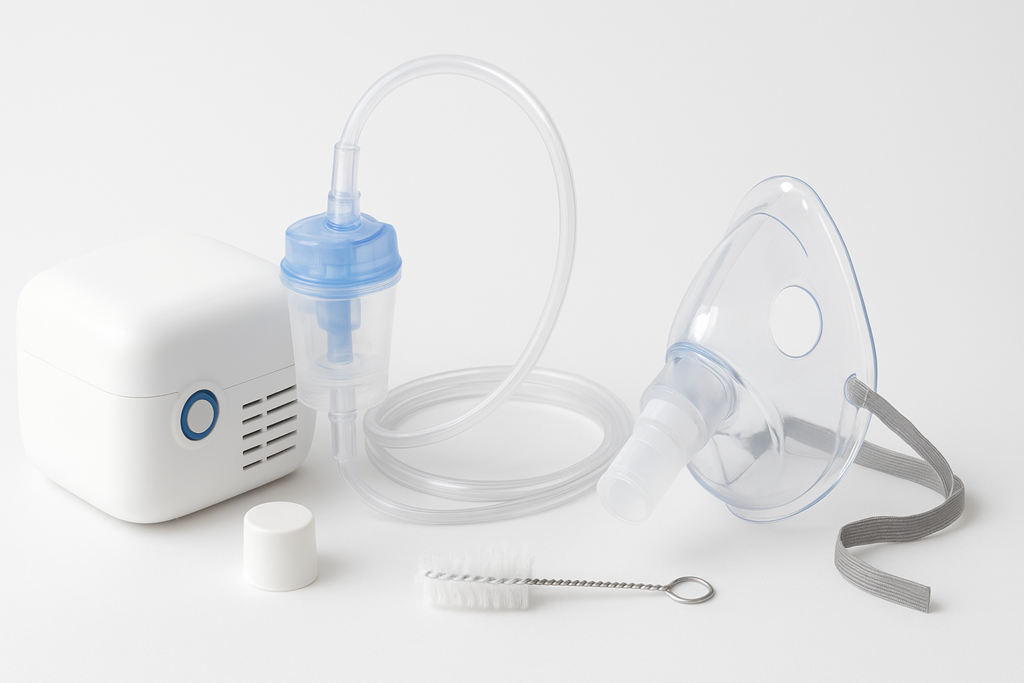
- Wash the medication cup, mouthpiece, and mask in warm soapy water.
- Rinse thoroughly to remove all soap residue.
- Shake off excess water and air-dry completely on a clean surface.
- Wipe the compressor or battery unit with a damp cloth only.
Do not rush the drying step. Moisture left inside the cup, mask, or mouthpiece can create problems later, especially if the device is stored in a closed case.
How to disinfect portable nebulizer parts
Cleaning removes visible residue. Disinfection is a separate step that may be recommended after illness, heavy use, or on a schedule listed in the manual.
- Use only methods approved by the manufacturer
- Disinfect after illness, heavy use, or as directed in the manual
- Common options may include boiling, vinegar solutions, or disinfectant products depending on the model
- Never disinfect electronic components unless explicitly allowed
If you are unsure which method is safe, check the manual or ask a pharmacist or respiratory therapist before trying anything new. For more general device hygiene guidance, see how to disinfect medical devices.
Parts you should not submerge or soak
Some components are washable, but others can be damaged by water. Treat anything with electronics as off-limits unless the manufacturer clearly says otherwise.
- Battery packs, compressors, charging ports, and control units
- Any part with electrical connections or sealed electronics
- Tubing if the manufacturer says it should not be washed
- Filters unless the manual says they are washable
When in doubt, assume a part should stay dry until the manual confirms it can be washed or disinfected.
Drying and storage best practices
Drying is just as important as washing. Reassembling a damp nebulizer can trap moisture and make the next treatment less reliable.
- Let all parts dry fully before reassembly
- Store in a clean, dry container or case
- Keep away from dust, humidity, and direct sunlight
- Avoid sealing parts away while damp
If you travel often, a protective case can help keep clean parts separate from used items and reduce exposure to dust or spills.
Portable nebulizer cleaning mistakes to avoid
Small mistakes can shorten the life of the device or make cleaning less effective. These are the most common issues to watch for:
- Using harsh chemicals, bleach, or abrasive scrubbers without guidance
- Skipping drying time and reassembling wet parts
- Sharing parts between users
- Ignoring cracks, discoloration, or residue buildup
- Using tap water for final rinsing if your instructions require sterile or distilled water
If a part looks worn or does not come clean with normal washing, it may be time to replace it rather than keep scrubbing.
Travel and on-the-go cleaning tips
Portable devices are convenient, but travel can make hygiene harder. A little planning helps you keep the nebulizer ready between uses.
- Pack a small cleaning kit with soap, wipes, and a drying cloth
- Bring spare cups or masks if you travel often
- Clean parts as soon as possible after use when away from home
- Use a protective case to keep clean parts sanitary
For buyers who want a setup that is easier to maintain on the road, our portable nebulizer buying guide covers features that can make cleaning simpler.
When to replace nebulizer parts
Even with good care, parts wear out over time. Replacement schedules vary by model, so the manual should always be your first reference.
- Replace cracked, warped, or discolored components
- Follow manufacturer timelines for masks, mouthpieces, filters, and cups
- Watch for slower mist output or unusual noise
- Replace parts sooner if they are difficult to clean or dry properly
Routine maintenance can also help you spot problems early. See our nebulizer maintenance tips for a simple upkeep checklist.
When to call a healthcare professional or pharmacist
Some situations call for extra guidance, especially when the user is more vulnerable or the device instructions are unclear.
- If you are unsure which cleaning method is safe for your model
- If a child, older adult, or immunocompromised user is involved
- If you notice recurring contamination, odor, or poor treatment performance
- If medication instructions conflict with device cleaning guidance
When device care and medication directions seem to conflict, ask a clinician or pharmacist to help you sort out the safest option.
Quick answers to common questions
How often should I clean a portable nebulizer?
Clean removable parts after each use unless the manufacturer gives different instructions. Disinfect on the schedule recommended in the user manual or after illness.
Can I wash all portable nebulizer parts with soap and water?
No. Removable medication-contact parts are usually washable, but electronic components, batteries, and charging parts should not be submerged.
Is air-drying enough after cleaning?
Yes, if the parts are washed and rinsed properly and then allowed to dry completely on a clean surface before reassembly.
Can I use vinegar to disinfect my nebulizer?
Only if your device manual says it is safe. Some models allow vinegar-based disinfection, while others require different methods.
What is the biggest cleaning mistake people make?
Reassembling the device while parts are still damp. Moisture can encourage contamination and affect performance.
Helpful next steps
If you want a simple routine, start with three habits: clean the removable parts after every treatment, dry everything completely, and replace worn components on schedule. For model-specific details, the user manual should always come first.
Learn more about nebulizer cleaning and compare care routines before your next treatment session.
Final takeaway
Knowing how to clean portable nebulizer parts the right way can help your device stay reliable, easier to use, and better prepared for the next treatment. Keep the process simple, follow the manual, and treat water, heat, and disinfectants with care around any electronic components.
Check your device manual, clean the removable parts after every treatment, and follow approved disinfection steps to keep each session safe and effective.
Comparison snapshot

A Simple Technique People Use Before Bed
A short routine designed to help your body relax and unwind naturally.
- ✔ Easy to learn and takes only a few minutes
- ✔ No equipment or supplements required
- ✔ Popular among people struggling to relax at night
| Product | Rating | Reviews | Availability |
|---|---|---|---|
| Men's KnitFlex Breeze Mesh Sneakers Oxfords Lace-Up Lightweight Casual Walking Shoes | 4.6 | 14,100 | Available from Amazon |
| Men's Charged Surge 4 Sneaker | 4.6 | 13,200 | Available from Amazon |
| Nike Women's Court Vision Low Next Nature Shoes | 4.6 | 5,200 | Available from Amazon |
| Womens High Top Canvas Sneakers,Lace-up Canvas Shoes,Casual Tennis Walking Shoes | 4.6 | 2,900 | Available from Amazon |
| Men's Running Shoes Comfortable Lightweight Breathable Walking Shoes Mesh Workout Casual Sports Shoes | 4.3 | 11,300 | Available from Amazon |
Pros and cons
Pros
- Clearer shortlist for how to clean portable nebulizer.
- Helps compare trade-offs before buying.
- Includes editorial review checkpoints.
Cons
- Pricing and availability should be verified on Amazon.
- Best choice depends on your use case.
- Product listings may change after publication.
Frequently asked questions
How often should I clean a portable nebulizer?
Clean removable parts after each use unless the manufacturer gives different instructions. Disinfect on the schedule recommended in the user manual or after illness.
Can I wash all portable nebulizer parts with soap and water?
No. Removable medication-contact parts are usually washable, but electronic components, batteries, and charging parts should not be submerged.
Is air-drying enough after cleaning?
Yes, if the parts are washed and rinsed properly and then allowed to dry completely on a clean surface before reassembly.
Can I use vinegar to disinfect my nebulizer?
Only if your device manual says it is safe. Some models allow vinegar-based disinfection, while others require different methods.
What is the biggest cleaning mistake people make?
Reassembling the device while parts are still damp. Moisture can encourage contamination and affect performance.
How to choose how to clean portable nebulizer
- Define your requirements
- Compare credible options
- Check current availability and terms
- Choose the best fit for your budget