
Recommended picks
This article may include affiliate links. If you click and buy, we may earn a commission at no extra cost to you.

4.6 rating 13,100 reviews
Check on Amazon
4.5 rating 104,200 reviews
Check on Amazon
4.6 rating 89,300 reviews
Check on AmazonQuick answer
Safe, effective home cleaning method using vinegar with clear warnings about parts that should not be soaked and when to use soap, water, or replacement instead
Key takeaways
- Can you clean a nebulizer with vinegar?
- What type of vinegar is best for cleaning a nebulizer?
- How long should nebulizer parts soak in vinegar?
- Which nebulizer parts should not be cleaned with vinegar?
Safety note: This guide is general information for home care only. Always check your nebulizer’s manual first, because cleaning and disinfection instructions can vary by brand and model.
Keeping a nebulizer clean helps reduce residue, mineral buildup, and odors that can affect performance. If you’re wondering how to clean a nebulizer with vinegar, the short answer is that white distilled vinegar can be useful for removable parts that need a gentle soak. It is not a universal disinfectant, and it should never be used on every component.
Below, you’ll find a safe, step-by-step method for cleaning the right parts, rinsing thoroughly, and knowing when soap, water, or replacement is the better choice.
What Vinegar Can and Cannot Do for Nebulizer Cleaning

A Simple Technique People Use Before Bed
A short routine designed to help your body relax and unwind naturally.
- ✔ Easy to learn and takes only a few minutes
- ✔ No equipment or supplements required
- ✔ Popular among people struggling to relax at night
White vinegar can help loosen mineral deposits and some leftover residue on removable hard parts. That makes it useful when you want to freshen components that look cloudy or have light buildup. However, vinegar is not a substitute for full disinfection when your device instructions call for it.
It’s best used on submersible, removable parts only. Do not use vinegar on the compressor, motor unit, tubing unless the manufacturer explicitly allows it, or any electrical component. Also expect a vinegar smell during cleaning; a thorough rinse is essential to remove odor and any loosened debris before the nebulizer is used again.
Supplies You’ll Need
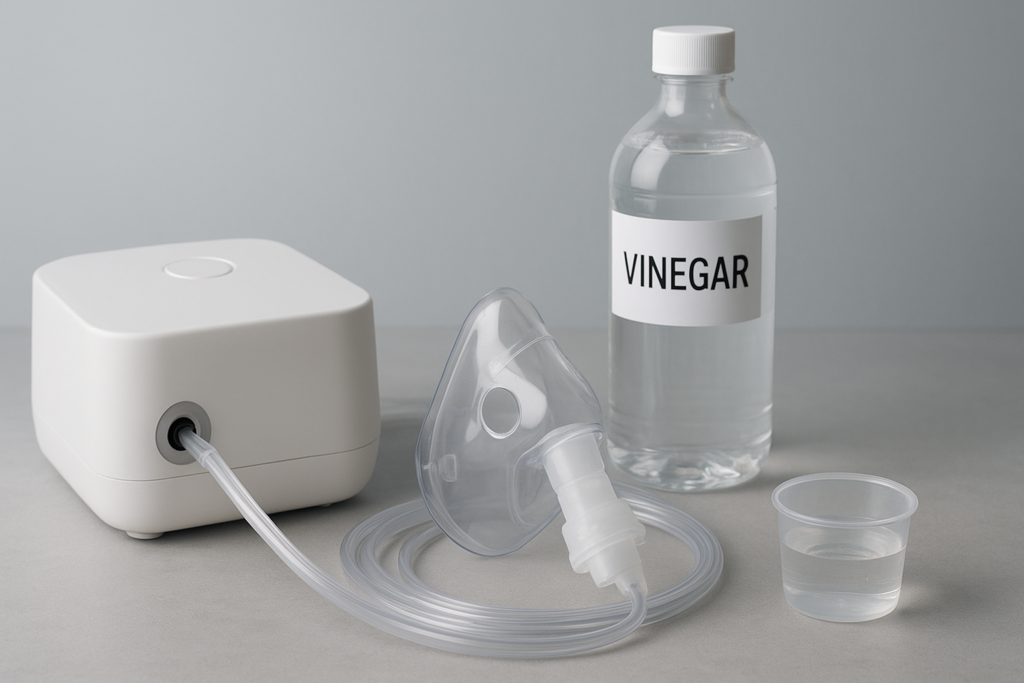
- White distilled vinegar
- Warm water
- Clean bowl or basin
- Mild dish soap for pre-cleaning if needed
- Clean towel or drying rack
- Optional: sterile or distilled water for a final rinse if your device instructions recommend it
Step-by-Step: How to Clean a Nebulizer with Vinegar
- Wash your hands and unplug the device before you begin.
- Disassemble only the removable parts according to the manufacturer’s instructions.
- If you see mucus, medication residue, or visible grime, pre-wash the parts with warm water and mild dish soap.
- Mix a cleaning solution using about 1 part white distilled vinegar to 3 or 4 parts warm water, unless the manual recommends a different ratio.
- Soak only the appropriate removable parts for the recommended time.
- Rinse each part thoroughly with clean water until the vinegar smell is gone and any loosened debris is removed.
- Shake off excess water and air-dry completely on a clean towel or drying rack before reassembly.
Parts You Should Never Soak in Vinegar
- Compressor or motor unit
- Tubing, unless the manufacturer explicitly says it is washable and vinegar-safe
- Filters
- Electrical cords or batteries
- Any part labeled as not submersible
These parts can be damaged by moisture, acid exposure, or trapped liquid. Tubing and filters are especially important to protect because they can hold water, degrade over time, or stop working properly if soaked.
How Long to Soak Nebulizer Parts
A practical soak window is usually 15 to 30 minutes, but the manufacturer’s guidance should always come first. Overnight soaking is not recommended unless the device instructions specifically allow it.
Longer soaking does not necessarily mean better cleaning. In some cases, it can increase wear, cloudiness, or surface damage, especially on plastic parts.
Rinsing, Drying, and Reassembly
Rinse each part until the vinegar odor is gone. If you can still smell vinegar, rinse again before drying.
Let all parts air-dry fully on a clean towel or drying rack. Avoid wiping with lint-producing cloths if possible, since fibers can cling to small components. Reassemble the nebulizer only when every part is completely dry.
How Often to Clean and Disinfect a Nebulizer
For most reusable nebulizer parts, daily cleaning after use is a good baseline. More thorough disinfection may be needed depending on how often you use the device, whether you’re recovering from illness, and what the manufacturer recommends.
If parts stay cloudy, warped, cracked, or discolored after cleaning, replacement is often the safer option. Cleaning cannot restore damaged materials to like-new condition.
When Vinegar Is Not the Best Option
Vinegar is not always the right choice. Skip it if:
- Your device manual recommends a different cleaning or disinfection method.
- Parts are heavily soiled with mucus or medication buildup and need a stronger pre-cleaning step.
- You need a true disinfecting step rather than basic descaling or deodorizing.
- The nebulizer includes materials that may react poorly to acid.
Common Mistakes to Avoid
- Using hot water that can warp plastic parts
- Mixing vinegar with bleach or other cleaners
- Skipping the rinse step
- Soaking the wrong components
- Reassembling the nebulizer while parts are still damp
Frequently Asked Questions
Can I use any vinegar to clean a nebulizer?
White distilled vinegar is usually the safest choice for cleaning removable nebulizer parts because it is mild and less likely to stain than darker vinegars. Avoid flavored or specialty vinegars.
Does vinegar disinfect a nebulizer?
Vinegar can help remove mineral buildup and some residue, but it is not always considered a full disinfectant. If disinfection is required, follow the manufacturer’s instructions.
Can I clean nebulizer tubing with vinegar?
Usually no, unless the manufacturer specifically says the tubing is washable and vinegar-safe. Tubing can trap moisture and may be damaged by soaking.
How do I get rid of the vinegar smell?
Rinse the parts thoroughly with clean water until the smell is gone, then let them air-dry completely. If odor remains, rinse again before reassembly.
What should I do if my nebulizer parts look cloudy after cleaning?
Cloudiness can come from mineral deposits, wear, or damage from cleaning products. Try a manufacturer-approved cleaning method and replace parts if the cloudiness does not improve.
Helpful Related Guides
- How to Clean a Nebulizer
- How Often Should You Clean a Nebulizer
- How to Disinfect a Nebulizer
- Nebulizer Parts and Replacement Guide
- Best Nebulizer Cleaning Supplies
Bottom line: White distilled vinegar can be a practical way to clean removable nebulizer parts when used correctly, but it should never replace the manufacturer’s instructions or a proper disinfection method when one is required. Check your nebulizer manual first, then clean only the removable parts that are safe to soak.
CTA: Check your nebulizer’s manual first, then follow the steps above to clean removable parts safely and keep your device ready for use.
Affiliate disclosure: This article may include affiliate links. If you click and buy, we may earn a commission at no extra cost to you.
Medical disclaimer: This content is for informational purposes only and is not medical advice. Consult a clinician or respiratory therapist for device and medication selection, and always follow manufacturer instructions for cleaning, maintenance, and approved medications.
Comparison snapshot
| Product | Rating | Reviews | Availability |
|---|---|---|---|
| Men's Charged Surge 4 Sneaker | 4.6 | 13,100 | Available from Amazon |
| Women's Go Walk Joy Slip-On Sneaker | 4.5 | 104,200 | Available from Amazon |
| Men's 608 V5 Casual Comfort Cross Trainer | 4.6 | 89,300 | Available from Amazon |
| Women’s VL Court 3.0 Sneaker | 4.5 | 12,700 | Available from Amazon |
| FITORY Womens Clogs Slip-on Potato Shoes Leather Mules with Suede Cork Footbed Size 6-11 | 4.4 | 897 | Available from Amazon |
Pros and cons
Pros
- Clearer shortlist for how to clean a nebulizer with vinegar.
- Helps compare trade-offs before buying.
- Includes editorial review checkpoints.
Cons
- Pricing and availability should be verified on Amazon.
- Best choice depends on your use case.
- Product listings may change after publication.
Frequently asked questions
Can I use any vinegar to clean a nebulizer?
White distilled vinegar is usually the safest choice for cleaning removable nebulizer parts because it is mild and leaves less staining than darker vinegars. Avoid flavored or specialty vinegars.
Does vinegar disinfect a nebulizer?
Vinegar can help remove mineral buildup and some residue, but it is not always considered a full disinfectant. Follow the manufacturer’s instructions if disinfection is required.
Can I clean nebulizer tubing with vinegar?
Usually no, unless the manufacturer specifically says the tubing is washable and vinegar-safe. Tubing can trap moisture and may be damaged by soaking.
How do I get rid of the vinegar smell?
Rinse the parts thoroughly with clean water until the smell is gone, then let them air-dry completely. If odor remains, rinse again before reassembly.
What should I do if my nebulizer parts look cloudy after cleaning?
Cloudiness can come from mineral deposits, wear, or damage from cleaning products. Try a manufacturer-approved cleaning method and replace parts if the cloudiness does not improve.
How to choose how to clean a nebulizer with vinegar
- Define your requirements
- Compare credible options
- Check current availability and terms
- Choose the best fit for your budget