
Recommended picks
This article may include affiliate links. If you click and buy, we may earn a commission at no extra cost to you.

4.6 rating 13,100 reviews
Check on Amazon
4.6 rating 6,200 reviews
Check on Amazon
4.5 rating 3,100 reviews
Check on AmazonQuick answer
Step-by-step maintenance guidance focused on safe cleaning, drying, and replacement of nebulizer filters to protect performance and hygiene.
Key takeaways
- How often should a nebulizer filter be cleaned?
- Can you wash a nebulizer filter with water?
- What should you use to clean a nebulizer filter?
- How do you know when a nebulizer filter needs replacing?
Nebulizer Filter Cleaning: Safe Steps to Keep Your Device Working Properly
A practical guide for patients and caregivers on when to clean, what to avoid, and how to prevent airflow problems and contamination.
If your nebulizer seems weaker than usual, the filter may be part of the problem. Knowing how to clean a nebulizer filter the right way can help you avoid unnecessary wear, but the exact steps depend on the model and filter type. Some filters are washable, while others should be replaced instead of cleaned.
What a nebulizer filter does
The filter helps protect the compressor and support proper airflow through the device. In many nebulizers, it also helps keep dust and debris from entering the system. That said, not every filter is designed the same way. Some are reusable and may be cleaned according to the manufacturer’s instructions, while others are disposable and should be replaced when dirty.
Before you do anything, check the user manual for your exact nebulizer model. That is the safest and most reliable source for filter care.
Before you clean: check the device instructions
Start by identifying the nebulizer model and the type of filter it uses. The manual should tell you whether the filter can be washed, rinsed, dried, or only replaced. If the instructions are missing, contact the manufacturer or your equipment supplier before trying to clean it.
Using the wrong method can damage the filter, affect the device, or void the warranty. When in doubt, do less rather than more.
How to clean a reusable nebulizer filter
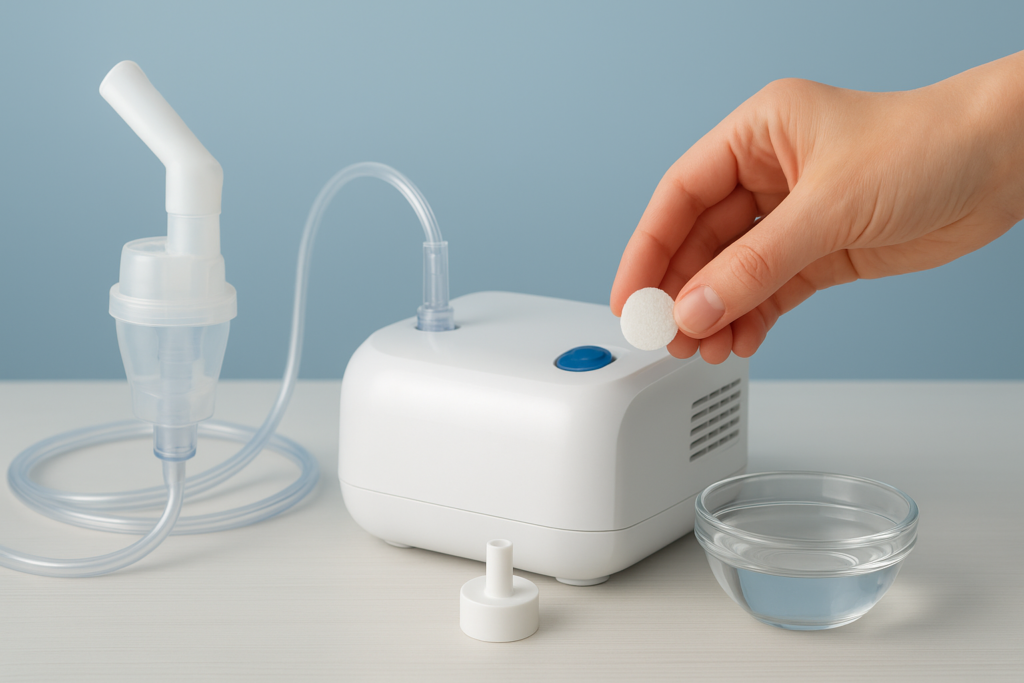
- Turn off and unplug the device before handling the filter.
- Remove the filter carefully without forcing it or stretching the housing.
- Use only the cleaning method approved by the manufacturer. If the manual allows gentle rinsing, follow those directions exactly.
- Avoid soap, bleach, alcohol, and hot water unless the instructions specifically say they are safe for your model.
- Let the filter air-dry completely before reinstalling it.
If the filter looks damaged, stays dirty after cleaning, or does not dry properly, replace it instead of reusing it.
What not to do when cleaning the filter
- Do not scrub, wring, or squeeze the filter material.
- Do not reinstall a damp filter.
- Do not use compressed air unless the manufacturer recommends it.
- Do not share filters between devices or users.
These mistakes can reduce performance, damage the filter, or increase contamination risk.
How often to clean or replace the filter
There is no single schedule that fits every nebulizer. Follow the manufacturer’s timing guidance first. For some devices, that may mean checking the filter regularly and replacing it on a set interval. For others, cleaning may be allowed only when the filter appears dirty.
Heavy use, dusty storage conditions, or visible discoloration may mean the filter needs attention sooner. It is smart to keep spare filters on hand so you are not left without a working device when one needs replacement.
Signs the filter needs replacing
- Reduced airflow or weaker nebulizer performance
- Visible dirt, discoloration, or damage
- Persistent odor, moisture retention, or clogging
- A filter that no longer dries properly or fits securely
If you notice any of these signs, replacing the filter is usually safer than trying to extend its use.
How to keep the nebulizer cleaner between uses
- Store the device in a clean, dry place.
- Wash your hands before handling parts.
- Clean the medication cup and tubing as directed by the manufacturer.
- Replace filters on schedule to help reduce contamination risk.
Good routine care makes it easier to spot problems early and keeps maintenance simple.
When to contact a clinician or equipment supplier
Reach out for help if the device still performs poorly after you replace the filter, or if you cannot confirm the correct filter type because the manual is missing. You should also contact a clinician or respiratory therapist if the user has respiratory symptoms that seem worse when the nebulizer is not working properly.
When equipment issues affect treatment, it is better to get guidance early than to guess at the fix.
Frequently asked questions
Can I wash a nebulizer filter with soap and water?
Only if the manufacturer says the filter is washable. Many filters should not be washed with soap, and some are meant to be replaced rather than cleaned.
How do I know if my nebulizer filter is dirty?
Common signs include discoloration, visible debris, reduced airflow, or the device sounding like it is working harder than usual.
How long should a nebulizer filter dry?
It should dry completely before use. Drying time depends on the material and room conditions, so follow the device instructions and never reinstall a damp filter.
Can a clogged filter affect medication delivery?
Yes. A clogged filter can reduce airflow and make the nebulizer less effective, which may affect how well medication is delivered.
Should nebulizer filters be shared?
No. Filters should not be shared between users or devices because that can increase contamination risk and may damage the equipment.
Related guides
Final takeaway
The safest approach is simple: check your manual, clean only if the filter is designed to be cleaned, let it dry fully, and replace it when it is dirty, damaged, or no longer performing well. If you are unsure, ask your equipment supplier or a respiratory therapist before using the filter again.
Check your nebulizer manual today, clean only the parts approved by the manufacturer, and replace the filter on schedule to keep treatments safe and effective.
Important notices
Affiliate disclosure: This article may include affiliate links. If you click and buy, we may earn a commission at no extra cost to you.
Medical disclaimer: This content is for informational purposes only and is not medical advice. Consult a clinician or respiratory therapist for device and medication selection, and always follow manufacturer instructions for cleaning, maintenance, and approved medications.
Comparison snapshot

A Simple Technique People Use Before Bed
A short routine designed to help your body relax and unwind naturally.
- ✔ Easy to learn and takes only a few minutes
- ✔ No equipment or supplements required
- ✔ Popular among people struggling to relax at night
| Product | Rating | Reviews | Availability |
|---|---|---|---|
| Men's Charged Surge 4 Sneaker | 4.6 | 13,100 | Available from Amazon |
| Men's Daily 4.0 Shoe | 4.6 | 6,200 | Available from Amazon |
| Women Classic Retro Gum Sole Fashion Sneakers Casual Tennis Skate Shoe Genuine Leather Walking Footwear Anti Slip Trainers | 4.5 | 3,100 | Available from Amazon |
| Men's Charged Assert 10 Shoes | 4.6 | 22,600 | Available from Amazon |
| Mens Running Shoes Slip On Tennis Walking Sneakers Workout Athletic Lightweight Casual Sport Shoes | 4.3 | 899 | Available from Amazon |
Pros and cons
Pros
- Clearer shortlist for how to clean a nebulizer filter.
- Helps compare trade-offs before buying.
- Includes editorial review checkpoints.
Cons
- Pricing and availability should be verified on Amazon.
- Best choice depends on your use case.
- Product listings may change after publication.
Frequently asked questions
Can I wash a nebulizer filter with soap and water?
Only if the manufacturer says the filter is washable. Many filters should not be washed with soap, and some are meant to be replaced rather than cleaned.
How do I know if my nebulizer filter is dirty?
Common signs include discoloration, visible debris, reduced airflow, or the device sounding like it is working harder than usual.
How long should a nebulizer filter dry?
It should dry completely before use. Drying time depends on the material and room conditions, so follow the device instructions and never reinstall a damp filter.
Can a clogged filter affect medication delivery?
Yes. A clogged filter can reduce airflow and make the nebulizer less effective, which may affect how well medication is delivered.
Should nebulizer filters be shared?
No. Filters should not be shared between users or devices because that can increase contamination risk and may damage the equipment.
How to choose how to clean a nebulizer filter
- Define your requirements
- Compare credible options
- Check current availability and terms
- Choose the best fit for your budget