
Quick answer
Step-by-step cleaning instructions focused on hygiene, residue removal, and preventing contamination without damaging the mouthpiece.
Key takeaways
- How often should a nebulizer mouthpiece be cleaned?
- Can you wash a nebulizer mouthpiece with soap and water?
- Should a nebulizer mouthpiece be disinfected or sterilized?
- What should you avoid when cleaning a nebulizer mouthpiece?
How to Clean a Nebulizer Mouthpiece Safely and Thoroughly
A simple maintenance guide for patients and caregivers who want cleaner treatments, better airflow, and less buildup.
Keeping the mouthpiece clean is one of the easiest ways to support better nebulizer hygiene at home. A few careful steps can help remove residue, reduce buildup, and keep the part ready for the next treatment. Because cleaning needs can vary by device and medication, always start with the manufacturer’s instructions.
Reviewed by a healthcare content editor with medical device safety experience.
Why the mouthpiece needs regular care
The mouthpiece is the part you place near your mouth during treatment, so it can collect medication residue, moisture, and mineral deposits over time. Regular cleaning helps:
- Reduce medication residue and mineral buildup
- Support proper airflow and treatment delivery
- Lower the chance of bacteria, mold, and other contamination
- Extend the life of the mouthpiece and related parts
What you need before you start

A Simple Technique People Use Before Bed
A short routine designed to help your body relax and unwind naturally.
- ✔ Easy to learn and takes only a few minutes
- ✔ No equipment or supplements required
- ✔ Popular among people struggling to relax at night
Gather a few simple supplies before cleaning:
- Mild dish soap and warm water
- A clean basin or bowl
- A clean towel or paper towel
- An approved disinfecting solution, if your manufacturer recommends one
- Clean hands before handling the parts
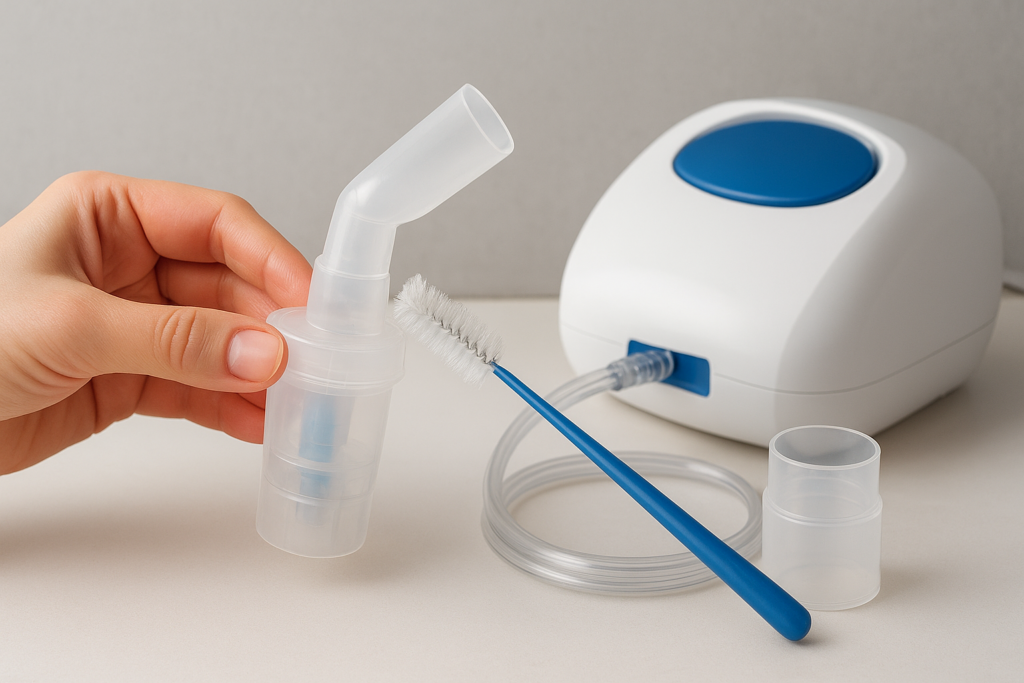
How to clean a nebulizer mouthpiece step by step
- Detach the mouthpiece from the nebulizer parts.
- Rinse away any visible residue with warm water.
- Wash it gently with mild soap and warm water.
- Rinse thoroughly so no soap remains.
- Shake off excess water and place it on a clean surface to air-dry completely.
Use gentle handling only. Scrubbing too hard can scratch some materials and make them harder to keep clean.
When and how to disinfect the mouthpiece
Cleaning removes dirt and residue, while disinfection is a separate step that may be recommended on a schedule set by the manufacturer. If disinfection is needed, follow the device instructions exactly and use only approved methods or solutions.
- Check the manual before using any disinfecting method
- Use only solutions or procedures the manufacturer approves
- Do not boil or microwave the mouthpiece unless the instructions explicitly allow it
- Rinse and dry completely after disinfection if the product directions require it
What not to do
- Do not use harsh chemicals or abrasive scrubbers
- Do not share mouthpieces between users
- Do not reassemble the nebulizer while parts are still wet
- Do not store the mouthpiece in a closed container before it is fully dry
- Do not put it in the dishwasher unless the manufacturer says it is dishwasher-safe
How often to clean and replace it
Cleaning frequency depends on the nebulizer model, the medication used, and the manufacturer’s guidance. In many cases, the mouthpiece should be cleaned after each use or at least daily. Disinfection, if recommended, may follow a different schedule.
- Clean after each use if your device instructions say to
- Disinfect only on the schedule advised for your nebulizer
- Inspect for cracks, discoloration, or warping
- Replace worn or damaged mouthpieces promptly
Storage tips to keep it clean longer
Once the mouthpiece is fully dry, store it in a clean, dry place away from dust and moisture. Keeping parts separated until they are completely dry can help prevent trapped moisture and unwanted buildup.
- Store in a clean, dry place away from dust
- Keep parts separated until fully dry
- Use a dedicated container or clean pouch if recommended
- Avoid touching the inside of the mouthpiece unnecessarily
Quick answers to common questions
Can I clean a nebulizer mouthpiece with just water?
Rinsing with water can remove some residue, but most mouthpieces should also be washed with mild soap and dried thoroughly. Always follow the manufacturer’s instructions.
How often should I clean the mouthpiece?
Many users clean it after each treatment or at least daily, but the exact schedule depends on the device and medication. Check the product manual for guidance.
Is it safe to put the mouthpiece in the dishwasher?
Usually no, unless the manufacturer specifically says it is dishwasher-safe. Heat and detergents can damage some materials.
Do I need to disinfect it every time?
Not always. Cleaning is often done after each use, while disinfection is typically recommended on a less frequent schedule or when contamination is suspected.
When should I replace the mouthpiece?
Replace it if you notice cracks, cloudiness, warping, persistent residue, or any damage that could affect fit or hygiene.
Helpful related guides
- How to clean nebulizer tubing
- How to disinfect nebulizer parts
- Nebulizer maintenance checklist
- How often to replace nebulizer parts
- How to use a nebulizer correctly
Check your device manual, clean the mouthpiece after use, and replace any worn parts to keep treatments safe and effective.
Affiliate disclosure: This article may include affiliate links. If you click and buy, we may earn a commission at no extra cost to you.
Medical disclaimer: This content is for informational purposes only and is not medical advice. Consult a clinician or respiratory therapist for device and medication selection, and always follow manufacturer instructions for cleaning, maintenance, and approved medications.
Pros and cons
Pros
- Clearer shortlist for how to clean nebulizer mouthpiece.
- Helps compare trade-offs before buying.
- Includes editorial review checkpoints.
Cons
- Pricing and availability should be verified on Amazon.
- Best choice depends on your use case.
- Product listings may change after publication.
Frequently asked questions
Can I clean a nebulizer mouthpiece with just water?
Rinsing with water can remove some residue, but most mouthpieces should also be washed with mild soap and thoroughly dried. Always follow the manufacturer’s instructions.
How often should I clean the mouthpiece?
Many users clean it after each treatment or at least daily, but the exact schedule depends on the device and medication. Check the product manual for guidance.
Is it safe to put the mouthpiece in the dishwasher?
Usually no, unless the manufacturer specifically says it is dishwasher-safe. Heat and detergents can damage some materials.
Do I need to disinfect it every time?
Not always. Cleaning is often done after each use, while disinfection is typically recommended on a less frequent schedule or when contamination is suspected.
When should I replace the mouthpiece?
Replace it if you notice cracks, cloudiness, warping, persistent residue, or any damage that could affect fit or hygiene.
How to choose how to clean nebulizer mouthpiece
- Define your requirements
- Compare credible options
- Check current availability and terms
- Choose the best fit for your budget