
Recommended picks
This article may include affiliate links. If you click and buy, we may earn a commission at no extra cost to you.

4.6 rating 13,100 reviews
Check on Amazon
4.5 rating 12,700 reviews
Check on Amazon
4.6 rating 14,100 reviews
Check on AmazonQuick answer
A clear, safety-first cleaning guide that explains daily care, deep cleaning, drying, and common mistakes to help users maintain a nebulizer properly.
Key takeaways
- How often should a nebulizer machine be cleaned?
- What parts of a nebulizer need to be washed after each use?
- Can you boil nebulizer parts or put them in the dishwasher?
- How do you disinfect nebulizer parts safely?
How to Clean a Nebulizer Machine Safely and Effectively
A practical step-by-step guide for keeping your device hygienic, working properly, and ready for the next treatment
If you use a nebulizer regularly, a simple cleaning routine can help keep the device in good working order and reduce buildup on the parts that touch medication and your mouth or face. The key is to clean the right components the right way: patient-contact parts need routine washing, while the compressor itself should only be wiped on the outside.
This guide covers the basics of how to clean a nebulizer machine, including daily care, disinfection when appropriate, drying, storage, and common mistakes to avoid. Because cleaning methods can vary by brand and model, always check your device manual first.
Why cleaning your nebulizer matters

A Simple Technique People Use Before Bed
A short routine designed to help your body relax and unwind naturally.
- ✔ Easy to learn and takes only a few minutes
- ✔ No equipment or supplements required
- ✔ Popular among people struggling to relax at night
Regular cleaning helps keep residue, moisture, and debris from building up in the parts you use for treatment. That matters for a few practical reasons:
- It helps prevent medication residue and moisture from collecting in the cup, mask, or mouthpiece.
- It may reduce the chance of contamination in reusable parts when they are handled and stored properly.
- It supports consistent aerosol delivery and overall device performance.
- It can extend the life of reusable components by preventing buildup and wear.
What parts of the nebulizer should be cleaned
Not every part of a nebulizer is cleaned the same way. Focus on the removable pieces that come into contact with medication or the user.
- Medication cup or chamber: This is the main part that holds the solution and should be cleaned after use.
- Mouthpiece or mask: These patient-contact parts should be washed regularly.
- T-piece, connector, and other removable accessories: Clean these if your model includes them and the manual says they are washable.
- Air tubing: Many models do not allow tubing to be washed or submerged. Some tubing is replaced rather than cleaned, so check the instructions before doing anything with it.
- Compressor unit: The electrical base should be cleaned on the exterior only and never submerged in water.
What you need before you start
Gather a few simple supplies before cleaning:
- Mild dish soap and warm water
- Clean basin or bowl
- Clean towel or paper towel
- White vinegar or an approved disinfectant, if your manufacturer allows it
- Fresh water for rinsing and a clean, dust-free space for air-drying
Step-by-step: how to clean a nebulizer machine
- Wash your hands first. Clean hands help reduce the chance of transferring dirt or germs to the parts.
- Disassemble the device. Separate the medication cup, mouthpiece or mask, and any other removable parts according to the user manual.
- Rinse patient-contact parts after each use. Empty any leftover medication and rinse the cup, mouthpiece, or mask as directed by the manufacturer.
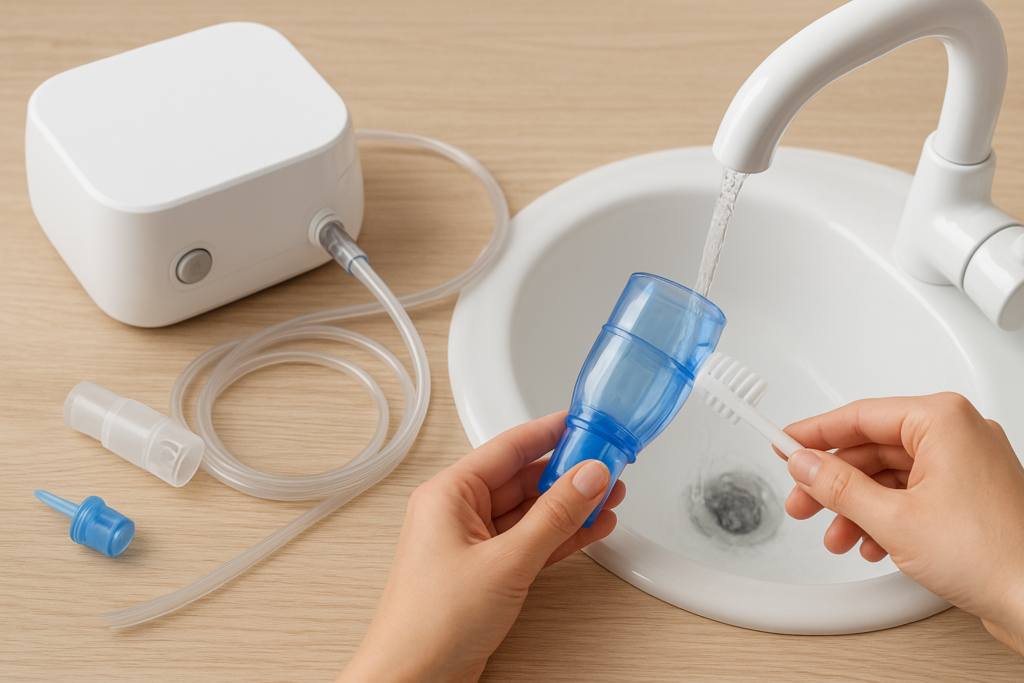
- Wash removable parts in warm soapy water. Use mild dish soap and gently clean the washable components.
- Rinse thoroughly. Make sure all soap residue is removed so it does not interfere with the next treatment.
- Shake off excess water. Place the parts on a clean towel or paper towel in a dust-free area.
- Let everything air-dry completely. Do not reassemble the nebulizer until all washable parts are fully dry.
- Wipe the compressor exterior only. Use a damp cloth on the outside of the compressor if needed, but do not submerge the unit or let liquid enter the device.
How to disinfect nebulizer parts
Disinfection is different from routine washing. Washing removes visible residue and helps keep parts clean after use. Disinfection is a separate step that may be recommended by the manufacturer or a clinician for certain parts or situations.
Only use a disinfection method if it is approved for your specific nebulizer model and part material. Some manufacturers allow a diluted vinegar solution or a medical disinfectant, while others do not. If a method is allowed, follow the exact dilution, soak time, and rinsing instructions provided by the manufacturer.
- Use disinfection only when recommended, not as a substitute for routine washing.
- Rinse thoroughly after any approved disinfection step.
- Allow parts to dry completely before reassembly.
- Never mix cleaning chemicals unless the manufacturer specifically instructs you to do so.
What not to do when cleaning a nebulizer
A few common mistakes can damage the device or make cleaning less effective:
- Do not boil parts unless the manufacturer specifically says boiling is safe.
- Do not wash or submerge tubing unless the instructions clearly allow it.
- Do not use harsh cleaners, bleach, alcohol, or abrasive scrubbers unless the manufacturer explicitly supports that method.
- Do not reassemble parts while they are still wet.
- Do not share nebulizer parts between users.
How often to clean, disinfect, and replace parts
The right schedule depends on the device, the part, and your clinician’s guidance. A general routine often looks like this:
- After every treatment: Rinse and wash patient-contact parts.
- Daily: Clean and air-dry reusable components that are used regularly.
- Weekly: Disinfect only if recommended by the manufacturer or your clinician.
- As needed: Replace worn masks, tubing, filters, and chambers based on the manual or provider guidance.
If you are caring for a child, an older adult, or someone with a higher infection risk, ask a clinician or pharmacist for a device-specific schedule.
Troubleshooting common cleaning problems
If your nebulizer still looks or smells off after cleaning, the issue may be residue, mineral buildup, or worn materials.
- Persistent smell: Wash again using the approved method, then let the parts dry fully in a clean area. If the odor remains, the part may need replacement.
- Cloudy residue: This can happen with mineral deposits or soap residue. Rinse more thoroughly and check whether your water source is contributing to buildup.
- Cracks, warping, or discoloration: These are signs the part may no longer be safe or effective to use.
- Unclear instructions: Contact the manufacturer or pharmacist if you are unsure how to clean a specific component.
Best practices for storage and maintenance
Good storage habits make cleaning easier and help keep parts ready for the next treatment.
- Store dry parts in a clean container or bag.
- Keep the compressor in a dust-free area.
- Check filters regularly and replace them when needed.
- Use a simple routine so cleaning does not get skipped or rushed.
Frequently asked questions
How often should I clean a nebulizer machine?
Rinse and wash the patient-contact parts after each use, then let them air-dry completely. Follow the manufacturer’s instructions for any weekly disinfection or replacement schedule.
Can I clean nebulizer tubing with water?
Usually, tubing should not be submerged or washed unless the manufacturer specifically says it is safe. In many cases, tubing is replaced rather than cleaned.
Can I use vinegar to disinfect nebulizer parts?
Some manufacturers allow a diluted vinegar solution for certain parts, but not all devices do. Always check the user manual first and rinse thoroughly afterward.
How do I dry nebulizer parts after washing?
Place the parts on a clean towel or paper towel in a dust-free area and let them air-dry completely before reassembly. Do not use a cloth that may leave lint behind.
When should I replace nebulizer parts?
Replace parts if they are cracked, discolored, warped, or still smell after cleaning. Also follow the replacement schedule in the device manual or from your healthcare provider.
Need a cleaner, safer routine? Explore our nebulizer care guides and replacement parts to keep every treatment running smoothly.
How to use a nebulizer | Nebulizer treatment guide | Nebulizer mask vs mouthpiece | How often to replace nebulizer parts | Best nebulizer for adults | Best nebulizer for kids | How to disinfect medical devices at home
Affiliate disclosure: This article may include affiliate links. If you click and buy, we may earn a commission at no extra cost to you.
Medical disclaimer: This content is for informational purposes only and is not medical advice. Consult a clinician or respiratory therapist for device and medication selection, and always follow manufacturer instructions for cleaning, maintenance, and approved medications.
Comparison snapshot
| Product | Rating | Reviews | Availability |
|---|---|---|---|
| Men's Charged Surge 4 Sneaker | 4.6 | 13,100 | Available from Amazon |
| adidas Women’s VL Court 3.0 Sneaker | 4.5 | 12,700 | Available from Amazon |
| Men's KnitFlex Breeze Mesh Sneakers Oxfords Lace-Up Lightweight Casual Walking Shoes | 4.6 | 14,100 | Available from Amazon |
| Mens Running Shoes Slip On Tennis Walking Sneakers Workout Athletic Lightweight Casual Sport Shoes | 4.3 | 895 | Available from Amazon |
| Men's Lite Racer Adapt 7.0 Running Shoes | 4.5 | 7,100 | Available from Amazon |
Pros and cons
Pros
- Clearer shortlist for how to clean a nebulizer machine.
- Helps compare trade-offs before buying.
- Includes editorial review checkpoints.
Cons
- Pricing and availability should be verified on Amazon.
- Best choice depends on your use case.
- Product listings may change after publication.
Frequently asked questions
How often should I clean a nebulizer machine?
Rinse and wash the patient-contact parts after each use, then let them air-dry completely. Follow the manufacturer’s instructions for any weekly disinfection or replacement schedule.
Can I clean nebulizer tubing with water?
Usually, tubing should not be submerged or washed unless the manufacturer specifically says it is safe. In many cases, tubing is replaced rather than cleaned.
Can I use vinegar to disinfect nebulizer parts?
Some manufacturers allow a diluted vinegar solution for certain parts, but not all devices do. Always check the user manual first and rinse thoroughly afterward.
How do I dry nebulizer parts after washing?
Place the parts on a clean towel or paper towel in a dust-free area and let them air-dry completely before reassembly. Do not use a cloth that may leave lint behind.
When should I replace nebulizer parts?
Replace parts if they are cracked, discolored, warped, or still smell after cleaning. Also follow the replacement schedule in the device manual or from your healthcare provider.
How to choose how to clean a nebulizer machine
- Define your requirements
- Compare credible options
- Check current availability and terms
- Choose the best fit for your budget